What Are The Eligibility Criteria For Youtube Shorts Creator Program Explained
YouTube Shorts has reshaped digital content creation, offering creators a direct pathway to monetization and global reach through bite-sized videos. Since its launch, the platform has grown into a powerhouse, competing with TikTok and forcing traditional YouTube videos to adapt. For creators, joining the YouTube Shorts Creator Program unlocks exclusive tools, financial incentives, and deeper audience insights—but only if they meet strict eligibility criteria. Understanding these requirements is critical, as they dictate whether a channel can tap into the Shorts Fund, ad revenue, and other monetization opportunities.
The program’s success hinges on a blend of algorithmic favoritism and creator performance, prioritizing videos with high retention, engagement, and adherence to platform guidelines. Unlike regular YouTube videos, Shorts thrive on speed, trends, and viral potential, demanding a different content strategy. Creators must navigate watch time thresholds, subscriber benchmarks, and content policies to qualify, while also mastering the art of crafting Shorts that resonate instantly. Failure to align with these expectations can leave even established channels on the sidelines, missing out on a lucrative revenue stream.
Understanding YouTube Shorts and Its Creator Program
YouTube Shorts represents a strategic pivot in YouTube’s evolution, transforming from a long-form video platform into a dynamic ecosystem that embraces short, engaging content. Launched in 2020 as a direct response to the rising popularity of competitors like TikTok and Instagram Reels, YouTube Shorts has become a cornerstone of the platform’s growth strategy, driving user retention and creator monetization. Its significance lies in its ability to democratize content creation, offering creators—regardless of channel size—a direct pathway to viral reach and revenue. For YouTube, Shorts serves as a dual-purpose tool: it retains younger audiences while providing a secondary income stream for creators through the YouTube Shorts Fund and ad-sharing revenue. The format’s algorithmic prioritization further ensures that high-quality, engaging content gains visibility, reshaping how creators approach content strategy.
The platform’s ecosystem now operates as a hybrid model, where Shorts and traditional long-form videos coexist, each optimized for distinct user behaviors. While regular YouTube videos cater to in-depth storytelling and tutorials, Shorts thrives on brevity, immediacy, and trend participation. This duality has led to a symbiotic relationship, where Shorts can serve as teasers for longer content, driving traffic to creators’ primary channels. The Creator Program for Shorts is designed to capitalize on this dynamic, offering tools and incentives tailored to the unique demands of short-form content creation.

Evolution and Impact of YouTube Shorts on Content Creators and Platform Growth
YouTube Shorts emerged as a response to the shift in consumer behavior toward bite-sized content, a trend accelerated by the COVID-19 pandemic. By 2021, Shorts had amassed over 5 trillion views globally, surpassing expectations and forcing YouTube to rethink its monetization and discovery algorithms. For creators, the format introduced a low-barrier entry point to viral success, as Shorts prioritize engagement metrics like watch time, shares, and likes over subscriber counts. This shift has democratized the platform, allowing micro-influencers and niche creators to compete with established channels for visibility.
The impact on YouTube’s ecosystem is multifaceted: - Audience Expansion: Shorts attracted a younger demographic, with Gen Z and Millennials spending increasing time on the platform, countering the decline in long-form video consumption among these groups. - Algorithm Adaptation: YouTube’s recommendation system now favors Shorts in the "Shorts Shelf" (a dedicated section on the homepage), ensuring creators can gain traction without relying solely on SEO or subscriber growth. - Monetization Diversification: Creators no longer depend exclusively on ad revenue from long-form videos; Shorts offers separate monetization streams, including the Shorts Fund (a $100 million monthly pool distributed to qualifying creators) and ad revenue share from Shorts views.
Table of Contents
- Understanding YouTube Shorts and Its Creator Program
- Evolution and Impact of YouTube Shorts on Content Creators and Platform Growth
- Key Features of YouTube Shorts and Their Differences from Regular Videos
- How the YouTube Shorts Algorithm Prioritizes Content
- Eligibility Criteria for Joining the YouTube Shorts Creator Program
- Minimum Requirements for Eligibility
- Role of Watch Time in Eligibility Determination
- Subscriber and View Metrics for Eligibility
- Content Guidelines and Compliance Requirements
- Checklist for Verifying Eligibility
- Step-by-Step Application Process for the YouTube Shorts Creator Program
- Accessing the YouTube Partner Program (YPP) Dashboard
- Navigating to the Shorts Fund Application Section
- Documentation and Verification Process
- Potential Reasons for Rejection and Rectification
- Timeline for Approval and Potential Delays
- Monetization and Financial Opportunities Through YouTube Shorts
- YouTube Shorts Fund: Payout Structures and Regional Eligibility
- Additional Monetization Methods Beyond the Shorts Fund
- Tax Implications for YouTube Shorts Earnings
- Comparison of Monetization Methods for YouTube Shorts
- Tools and Strategies to Optimize YouTube Shorts for Eligibility and Growth
- Content Creation Best Practices for High-Eligibility Shorts
- Leveraging YouTube Analytics for Shorts Performance Tracking
- Third-Party Editing Tools for Professional Shorts Production
- Consistency and Content Calendar Strategies
- Collaboration Strategies to Boost Visibility and Eligibility
For YouTube, the format has become a growth engine, with Shorts driving 60% of total watch time in some regions by 2023. The platform’s ability to retain users longer through Shorts has also improved its competitive edge against social media apps, which often siphon off younger audiences.
Key Features of YouTube Shorts and Their Differences from Regular Videos
YouTube Shorts distinguishes itself through technical, algorithmic, and monetization-specific features that cater to short-form content. Below is a comparative analysis of its core attributes against regular YouTube videos, live streams, and YouTube Premium features.
| Feature | YouTube Shorts | Regular YouTube Videos | Live Streams | YouTube Premium Features |
|---|---|---|---|---|
| Duration | Up to 60 seconds (extendable to 15 minutes for select creators in beta). | No strict limit; supports up to 12 hours for standard accounts, 24 hours for verified channels. | Unlimited duration (subject to platform guidelines). | N/A (applies to all content types). |
| Format and Orientation | Vertical (9:16 aspect ratio), optimized for mobile viewing. | Supports horizontal (16:9), vertical (9:16), and square (1:1) orientations. | Primarily vertical (9:16) or horizontal (16:9), depending on use case. | N/A (content format remains unchanged). |
| Discovery and Algorithm | Prioritized in the "Shorts Shelf," YouTube homepage, and search results. Relies heavily on watch time, shares, and early engagement. | Discovered via search, subscriptions, and recommendations based on click-through rate (CTR), watch time, and subscriber history. | Promoted through live chat notifications, community posts, and algorithmic live recommendations. | Includes ad-free viewing, background play, and offline downloads for Premium subscribers. |
| Monetization Eligibility | Separate from the standard YouTube Partner Program (YPP). Creators earn via Shorts Fund, ad revenue share, and Super Thanks. | Requires 1,000 subscribers and 4,000 watch hours (or 10M Shorts views) to join YPP. | Monetization available through Super Chats, Super Stickers, and channel memberships. | Offers ad revenue share for Premium members and exclusive content options. |
| Tools and Editing Features | Built-in editor with trimming, speed controls, text overlays, and AR effects. Supports auto-captioning and music licensing. | Advanced editing tools via YouTube Studio (multi-track editing, color correction, subtitles). | Live editing tools like polls, Q&A, and screen sharing during broadcasts. | N/A (enhances viewing experience rather than creation). |
| Audience Engagement | Designed for quick, viral interactions with features like "Add Yours" prompts and trending audio. | Encourages long-term community building via comments, community posts, and end screens. | Real-time engagement through live chat, donations, and co-streaming. | Enhances engagement via ad-free viewing and exclusive content. |
The table highlights how YouTube Shorts is optimized for speed, mobility, and algorithmic favoritism, making it ideal for creators who thrive on trends, humor, or quick tutorials. In contrast, regular videos and live streams serve niche audiences or require deeper investment in production quality. YouTube Premium features, while beneficial for viewers, do not directly influence content creation strategies.
How the YouTube Shorts Algorithm Prioritizes Content
The YouTube Shorts algorithm operates on a real-time, engagement-driven model, designed to surface content that maximizes watch time and user retention. Unlike traditional YouTube videos, which rely on subscriber history and CTR, Shorts prioritize early engagement signals—such as likes, shares, and comments within the first few seconds—to determine virality. Below are the key ranking factors and how they function:
- Watch Time and Completion Rate Shorts with higher completion rates (75%+) are favored, as they indicate strong user interest. The algorithm tracks whether viewers watch until the end or drop off early, using this data to predict future performance.
- Shares and Saves Content that is shared frequently or saved to playlists receives a boost in recommendations, as it signals high perceived value. YouTube’s system treats shares as a stronger signal than likes due to their viral potential.
- Trending Audio and Hashtags Using trending sounds, music, or
Eligibility Criteria for Joining the YouTube Shorts Creator Program
YouTube Shorts Creator Program offers creators financial incentives and exclusive features to reward high-quality, engaging short-form content. To qualify, creators must meet specific thresholds in channel performance, content compliance, and audience engagement. These criteria ensure only dedicated and compliant creators benefit from the program. Understanding these requirements is essential for creators aiming to maximize their Shorts potential while adhering to YouTube’s policies.
The eligibility criteria for the YouTube Shorts Creator Program are structured around measurable metrics that assess a channel’s consistency, audience retention, and adherence to platform guidelines. YouTube evaluates channels based on channel age, subscriber count, watch time, and content compliance. Each metric plays a critical role in determining whether a creator is ready to contribute meaningfully to the Shorts ecosystem.
Minimum Requirements for Eligibility
YouTube’s Shorts Creator Program requires creators to meet baseline thresholds across four primary categories: channel age, subscriber count, watch time, and content compliance. These metrics ensure creators have established a sustainable audience and maintain a track record of engaging content before receiving program benefits. Failure to meet any requirement disqualifies a channel from participation.
Channel Age A channel must be at least 6 months old to apply. This rule prevents new or temporary accounts from joining, ensuring only committed creators benefit from the program. YouTube uses the channel’s creation date, not the date of the first upload, to determine eligibility.
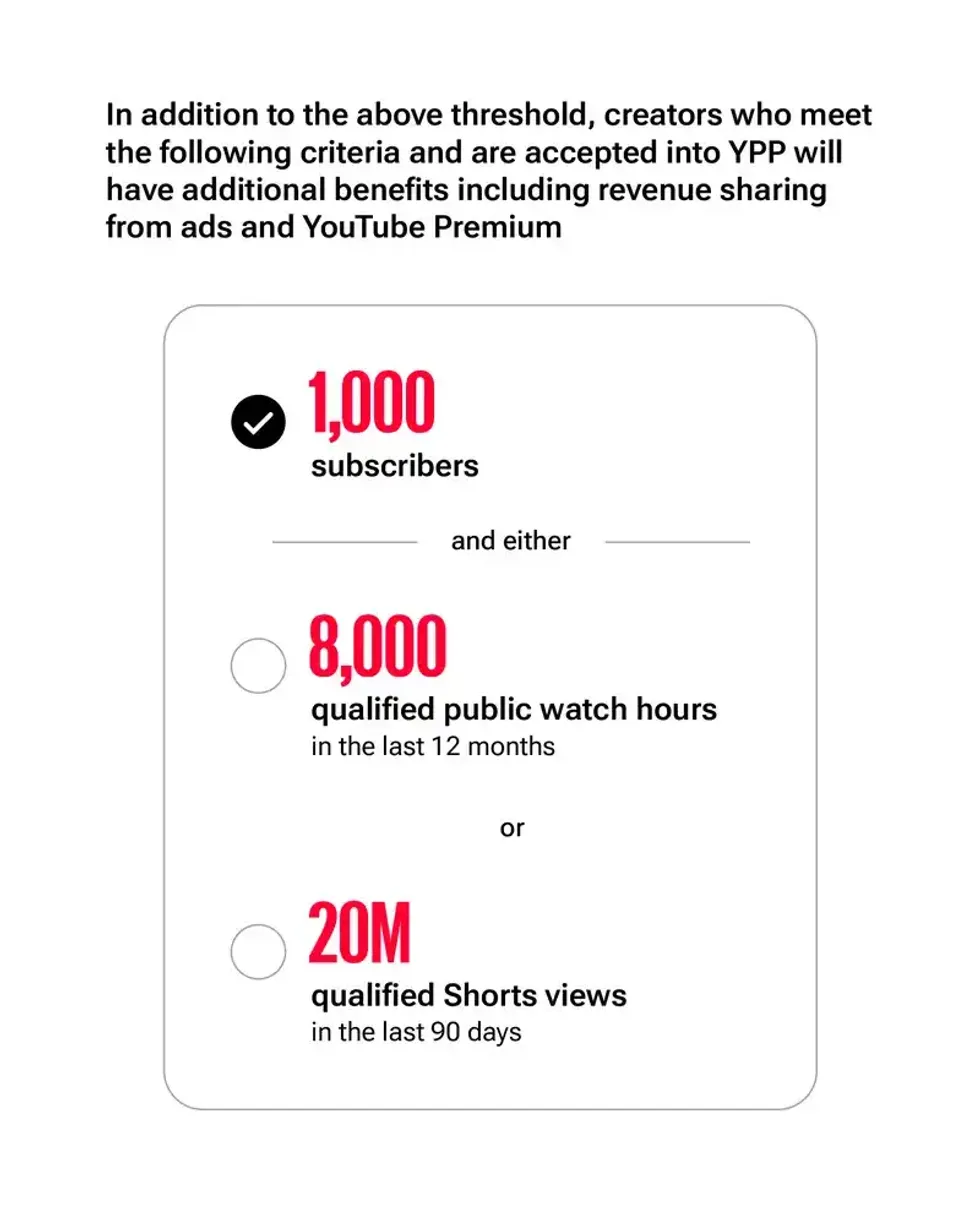
Subscriber Count Creators must have 1,000 or more subscribers at the time of application. This threshold indicates a channel has cultivated a loyal audience, reducing the likelihood of abandoned or low-engagement accounts. Subscriber growth is tracked in real-time through YouTube Studio Analytics, where creators can monitor their progress.
Watch Time The most critical metric is 4,000 watch hours in the last 12 months. Watch time measures the total minutes viewers spend on a channel’s content, reflecting audience engagement. YouTube calculates this by summing the duration of all watched videos, including Shorts and long-form content. Creators must ensure their content retains viewers for extended periods, as short clips with high drop-off rates may not contribute meaningfully to this total.
Content Compliance Channels must comply with YouTube’s Community Guidelines, copyright policies, and Shorts-specific rules. This includes avoiding copyright strikes, misleading content, or content that violates community standards. YouTube reviews a channel’s history for violations, and repeated offenses can lead to permanent disqualification.
Role of Watch Time in Eligibility Determination
Watch time serves as the cornerstone of YouTube’s eligibility criteria, as it directly correlates with audience engagement and content quality. YouTube measures watch time by aggregating the total duration viewers spend on a channel’s videos, including both Shorts and long-form content. This metric ensures creators produce content that retains viewers, a key indicator of a channel’s long-term viability.
YouTube’s algorithm tracks watch time in 12-month rolling windows, meaning creators must accumulate 4,000 hours within any consecutive 12-month period. For example, a creator who gains 3,500 hours in the first 10 months must earn an additional 500 hours in the remaining two months to meet the requirement. This system incentivizes consistent content production and audience retention.
Creators can monitor their watch time in YouTube Studio Analytics under the "Reach" tab, where the "Watch time" section provides a detailed breakdown. The "Average view duration" metric further helps creators assess whether their content holds viewer attention. For instance, a Short with a 90% retention rate contributes more to watch time than one with a 30% retention rate, even if both have similar view counts.
Subscriber and View Metrics for Eligibility
YouTube’s subscriber and view metrics serve as secondary but equally important eligibility criteria, ensuring creators have a dedicated audience. The 1,000-subscriber threshold acts as a filter for channels with a minimum level of engagement, while view metrics on Shorts provide additional context about a creator’s reach.
Subscriber Growth YouTube does not require a specific subscriber growth rate, but channels with stagnant or declining subscriber counts may struggle to meet watch time requirements. Creators should aim for steady growth, as rapid spikes followed by drops can indicate inconsistent content quality. YouTube Studio Analytics provides a "Subscribers" graph in the "Overview" tab, allowing creators to track trends over time.
Shorts-Specific Views While the program does not explicitly require a minimum number of Shorts views, YouTube prioritizes channels that consistently upload and optimize Shorts. A channel with high watch time but few Shorts may still qualify if its long-form content performs well. However, YouTube’s algorithm favors channels that treat Shorts as a primary content format. Creators should upload at least 1-2 Shorts per week to maximize eligibility chances.
To verify metrics, creators can use: - YouTube Studio Analytics: The "Reach" tab shows total views, watch time, and average view duration. - Shorts Analytics: Found under the "Content" tab, this section provides insights into Shorts performance, including views, watch time, and shares. - YouTube’s Official Documentation: The Help Center offers detailed explanations of eligibility criteria and analytics tools.
Content Guidelines and Compliance Requirements
Adherence to YouTube’s content policies is non-negotiable for Shorts Creator Program eligibility. Creators must avoid copyright infringements, misleading content, and community guideline violations, as these can result in immediate disqualification. YouTube’s automated systems and human reviewers actively monitor channels for policy breaches, making compliance a continuous requirement.
Copyright Restrictions Creators must ensure all Shorts contain original or properly licensed content. Unauthorized use of music, footage, or other copyrighted material can trigger strikes, leading to account restrictions. YouTube’s Content ID system automatically flags copyrighted material, and repeated violations result in disqualification. Creators should use YouTube’s Audio Library or obtain licenses for third-party content.
Misleading Content Shorts must not deceive viewers through misleading thumbnails, titles, or descriptions. YouTube’s policies prohibit: - Clickbait tactics that exaggerate content. - False claims or misleading representations. - Misleading editing that distorts reality. Creators should align their Shorts with Google’s advertising policies to avoid penalties, as misleading content can lead to demonetization or program exclusion.
Community Guidelines Violations Channels with three or more strikes within the past 90 days are ineligible. Violations include: - Harassment or hate speech. - Violent or graphic content. - Explicit or sexually suggestive material. - Dangerous or illegal activities. YouTube provides a three-strike system, where severe violations result in immediate account suspension. Creators should review YouTube’s Community Guidelines to ensure compliance.
Checklist for Verifying Eligibility
Before applying to the YouTube Shorts Creator Program, creators should verify their eligibility using this structured checklist. Each criterion must be satisfied to avoid application rejection.
Channel Requirements
- Channel age of 6 months or older (verified via YouTube Studio’s "About" section).
- No active copyright strikes or claims in the past 90 days (check under "Copyright" in YouTube Studio).
- No Community Guidelines strikes within the last 90 days (reviewable in "Channel Settings").
Audience Metrics
- 1,000+ subscribers (tracked in YouTube Studio Analytics under "Subscribers").
- 4,000+ watch hours in the last 12 months (monitored in the "Reach" tab).
- Consistent Shorts uploads (aim for 1-2 per week to optimize eligibility).
Content Compliance
- All Shorts contain original or licensed content (avoid Copyright ID claims).
- No misleading thumbnails, titles, or descriptions (align with YouTube’s policies).
- No violations of Community Guidelines (review recent uploads for compliance).
Technical Readiness
- Channel is not in a restricted or demonetized state (check "Monetization" tab).
- All videos, including Shorts, are publicly accessible (private/unlisted content does not count toward metrics).
- Channel has no active legal holds (reviewable in "Content" tab under "Legal Issues").
Creators can cross-reference these requirements with YouTube’s Creator Academy and Help Center, which offer detailed guides on eligibility verification. The [Shorts Creator Program FAQ](https
Step-by-Step Application Process for the YouTube Shorts Creator Program
To unlock monetization opportunities through the YouTube Shorts Fund and access additional perks, creators must navigate the structured application process within the YouTube Partner Program (YPP). This process involves multiple verification stages, adherence to platform policies, and compliance with tax documentation requirements. Below is a detailed breakdown of each step, including key decision points, potential challenges, and best practices to ensure a smooth application experience.
Accessing the YouTube Partner Program (YPP) Dashboard
Before applying for the YouTube Shorts Creator Program, creators must first meet the basic eligibility requirements for the YouTube Partner Program (YPP), such as accumulating 1,000 subscribers and 4,000 valid public watch hours (or 10 million Shorts views for Shorts-specific eligibility). Once eligible, creators can proceed to the Monetization tab in YouTube Studio, where the Shorts Fund application is integrated.
To begin, creators should: 1. Log in to YouTube Studio and navigate to the Monetization section. - Description: The Monetization tab is accessible via the left-hand menu, typically located under the "Earnings" or "Channel" settings. Creators must ensure they are using a verified AdSense account linked to their channel. 2. Confirm YPP eligibility by reviewing the checklist provided in the dashboard. - Description: The dashboard displays a summary of requirements, including subscriber count, watch time, and adherence to YouTube’s policies. Creators may need to resolve any pending issues, such as copyright strikes or community guideline violations, before proceeding.
> Note: If a creator’s channel is not yet monetized, they must first apply for the YPP and wait for approval before accessing the Shorts Fund application. This process can take up to 30 days, depending on the volume of pending reviews.
Navigating to the Shorts Fund Application Section
Once YPP eligibility is confirmed, creators can access the Shorts Fund application through the same Monetization tab. YouTube has gradually rolled out this feature, and its availability may vary based on region and channel performance.
The application process involves the following steps: 1. Locate the "Shorts Fund" or "Shorts Monetization" section within the Monetization tab. - Description: This section may appear as a dedicated tab or a dropdown menu under "Additional Features." Creators should look for options such as "Apply for Shorts Fund" or "Shorts Payment Settings." 2. Review the eligibility criteria specific to the Shorts Fund, which may include: - Minimum 100,000 views on Shorts in the past 90 days (varies by region). - Consistent upload frequency (e.g., at least one Short per week). - Adherence to YouTube’s Shorts-specific policies, such as no stitching/duets with copyrighted music unless properly licensed.
> Key Requirement: > Shorts views must be from the past 90 days and cannot include views from Long-form videos or YouTube Premium sources. Creators should use the YouTube Studio Analytics under "Shorts" to verify their view count.
Documentation and Verification Process
After confirming Shorts Fund eligibility, creators must complete tax and payment verification to receive payouts. This process ensures compliance with local regulations and prevents fraudulent claims.
The verification steps include: 1. Submitting Tax Forms - Creators in the U.S. must provide a W-9 form, while those in other countries may need to submit equivalent documentation (e.g., W-8BEN for non-U.S. residents). - Description: The form is accessible via the AdSense account settings linked to YouTube. Creators should ensure their legal name and Taxpayer Identification Number (TIN) match government records to avoid delays.
2. AdSense Account Verification - YouTube requires two-step verification on the linked AdSense account to prevent unauthorized access. - Description: Creators must enable SMS or email verification in their AdSense settings. If verification fails, YouTube may suspend payouts until the issue is resolved.
3. Bank Account and Payment Method Setup - Creators must add a valid bank account for direct deposits. Supported methods include: - U.S. bank accounts (for U.S. creators). - International bank accounts (for non-U.S. creators, subject to local banking regulations). - Description: YouTube supports SWIFT/BIC transfers for international payouts, but processing fees may apply. Creators should check their bank’s policies for incoming foreign transactions.
> Common Issues in Verification: > - Mismatched names between YouTube, AdSense, and bank accounts. > - Unverified phone numbers or emails in AdSense. > - Bank account restrictions (e.g., accounts flagged for fraud or under sanctions).
Potential Reasons for Rejection and Rectification
Not all eligible creators are automatically approved for the Shorts Fund. YouTube’s algorithm and manual reviewers may flag applications for policy violations, insufficient engagement, or documentation errors. Below are common rejection reasons and solutions:
- Insufficient Shorts Views or Watch Time
- Issue: Creators may not meet the 100,000 Shorts views in 90 days threshold or have low average watch time (e.g., <50% retention).
- Solution:
- Increase upload frequency and optimize Shorts for higher retention (e.g., using trending audio, hooks in the first 3 seconds).
- Promote Shorts via community posts, stories, or collaborations to boost visibility.
- Policy Violations
- Issue: Shorts containing copyrighted music without proper licensing, misleading thumbnails, or violent/hateful content may trigger automatic rejection.
- Solution:
- Use YouTube’s Audio Library or licensed music from platforms like Epidemic Sound.
- Review YouTube’s Shorts-specific policies to ensure compliance.
- AdSense or Payment Issues
- Issue: Unverified AdSense accounts, pending tax forms, or bank account problems can halt approval.
- Solution:
- Complete two-step verification in AdSense.
- Resubmit tax forms with correct details.
- Manual Review Flags
- Issue: YouTube may manually review channels with sudden spikes in activity or suspicious behavior (e.g., view manipulation).
- Solution:
- Provide additional documentation (e.g., proof of channel ownership).
- Avoid artificial engagement tactics (e.g., bot views, click farms).
> Appeal Process: > If rejected, creators can submit an appeal via YouTube Studio’s Help Center. Include: > - Screenshots of analytics proving Shorts performance. > - Evidence of policy compliance (e.g., licensed music, original content). > - Any additional verification documents requested by YouTube.
Timeline for Approval and Potential Delays
The approval timeline for the YouTube Shorts Creator Program varies based on automated checks, manual reviews, and documentation completeness. Below is a general flowchart of the process:
Step 1: YPP Eligibility Check (Automated) – Takes 1-30 days.
→ If eligible, proceed to Shorts Fund application.
Step 2: Shorts Fund Application Submission (Instant) – No delay if all criteria are met.
Step 3: Verification of Shorts Views & Watch Time (Automated) – Takes 24-72 hours.
→ If views/watch time are insufficient, application is rejected.
Step 4: Tax & Payment Documentation Review (Manual/Automated) – Takes 3-10 business days.
→ Delays occur if tax forms are incomplete or bank details are unverified.
Step 5: Final Approval or Manual Review (1-14 days).
→ Manual reviews may extend the process if YouTube suspects policy violations or fraud.
Monetization and Financial Opportunities Through YouTube Shorts
YouTube Shorts has evolved beyond a mere content format into a significant revenue stream for creators, offering multiple pathways to monetization. While the platform’s algorithm favors high-engagement, short-form content, creators can leverage financial opportunities through structured programs, sponsorships, and audience interactions. Understanding these mechanisms—from the YouTube Shorts Fund to indirect revenue streams—enables creators to maximize earnings while navigating tax obligations and optimization tools.
YouTube Shorts Fund: Payout Structures and Regional Eligibility
The YouTube Shorts Fund is a direct monetization program designed to reward creators for producing engaging Shorts content. Introduced in 2021, this fund distributes a portion of YouTube’s advertising revenue to eligible creators based on their Shorts performance. Key aspects of the program include:
- Payout Distribution: Payments are made monthly to creators who meet the eligibility criteria. The fund operates on a revenue-sharing model, where YouTube allocates a fixed pool of funds (typically ranging between $100 million to $1 billion annually, as announced by YouTube) to be distributed globally. Creators earn based on the number of views their Shorts accumulate, with higher engagement (likes, shares, comments) potentially increasing their share. - Eligible Regions: The Shorts Fund is currently available in over 100 countries, including the U.S., Canada, the UK, India, Brazil, Mexico, and several European nations. However, eligibility varies by region, and YouTube periodically updates the list. Creators in restricted regions (e.g., some African or Middle Eastern countries) may not qualify for the fund but can still monetize through other methods like ad revenue or sponsorships. - Payment Schedule: Payouts are processed monthly, typically around the 21st of each month for the previous month’s earnings. Creators must have an advertiser-friendly account and comply with YouTube’s policies to receive payments. The minimum payout threshold is $100, after which funds are transferred to the creator’s linked bank account or PayPal.
Note: The Shorts Fund is not a guaranteed income source but rather a performance-based reward. Creators must consistently produce high-quality, engaging content to qualify for payments. YouTube may adjust fund allocations or eligibility criteria without prior notice.
Additional Monetization Methods Beyond the Shorts Fund
While the Shorts Fund provides a direct revenue stream, creators can diversify their income through other channels tied to Shorts content. These methods often require strategic planning, audience growth, and compliance with YouTube’s monetization policies.
- Ad Revenue Sharing from Shorts YouTube has expanded its ad revenue sharing to Shorts, allowing creators in the YouTube Partner Program (YPP) to earn from ads displayed on their Shorts. This feature is still in beta testing (as of 2023) and limited to select regions, including the U.S., Canada, Japan, and parts of Europe. - Eligibility: Creators must be part of the YPP, have at least 1,000 subscribers, and adhere to YouTube’s ad policies. - Earnings Potential: Revenue is generated from ads shown before, during, or after Shorts, though the exact payout structure varies. Creators earn a share of the ad revenue based on engagement metrics such as watch time and ad impressions. - Key Considerations: Shorts with higher retention rates (viewers watching for longer durations) tend to generate more ad revenue. Creators should optimize content for watch time and avoid misleading thumbnails or clickbait titles, as these can lead to ad policy strikes.
- Brand Sponsorships and Affiliate Marketing Shorts serve as a powerful tool for brand collaborations due to their viral potential. Creators can monetize through: - Paid Sponsorships: Brands pay creators to feature their products or services in Shorts. Compensation varies widely—from $50 for micro-influencers to $10,000+ for macro-influencers—depending on audience size and engagement rates. - Affiliate Marketing: Creators can include affiliate links in their YouTube bio or community posts, directing viewers to purchase products. Platforms like Amazon Associates, LTK, or ShareASale offer commission-based earnings (typically 5–30% per sale). - Exclusive Discount Codes: Brands may provide unique discount codes for Shorts viewers, tracking sales through affiliate platforms.
Real-World Example: A fitness influencer with 500K subscribers might earn $2,000–$5,000 per Shorts sponsorship from a protein brand, provided their Short achieves 100K+ views. Their strategy involves quick, high-energy clips showcasing product usage (e.g., "30-Day Results with [Brand] Protein") and leveraging trendy audio to boost reach.
- Super Chats and Super Stickers During Live Streams While primarily associated with live streams, Super Chats and Super Stickers can also be integrated into Shorts-related engagement strategies. Creators who host live sessions (e.g., Q&As, tutorials, or behind-the-scenes content related to their Shorts) can encourage viewers to: - Super Chat: Pay to pin a message during the live stream (minimum $1 in most regions). - Super Stickers: Send animated stickers as gifts (priced at $0.50–$5 per sticker). - Super Thanks: Offer exclusive badges for one-time donations (starting at $2.50).
Earnings Potential: Top live streamers on Shorts-related content can earn $500–$5,000 per session from Super Chats alone, depending on audience size and viewer generosity. For example, a gaming creator who streams Shorts-making tutorials might see $1,000 in Super Chats if 200 viewers contribute an average of $5 each.
Tax Implications for YouTube Shorts Earnings
Creators earning through YouTube Shorts must account for tax obligations, which vary by country but generally include: - Self-Employment Taxes: In the U.S., Shorts earnings are considered self-employment income, subject to 15.3% (Social Security + Medicare) plus income tax (rates vary by bracket). Creators must report earnings on Schedule C of their IRS Form 1040. - Income Tax Deductions: Legitimate business expenses—such as equipment (cameras, editing software), internet costs, studio rent, and marketing tools—can be deducted. Creators should maintain detailed records for tax filings. - Sales Tax: Some regions impose sales tax on digital products or services. For example, creators selling digital downloads (e.g., presets, templates) via Shorts promotions may need to collect sales tax. - Foreign Earnings: Creators in countries with double taxation agreements (e.g., U.S.-UK, U.S.-Canada) may benefit from tax credits to avoid paying taxes twice.
Important: YouTube provides 1099-NEC forms (in the U.S.) for creators earning $600+ annually. Failure to report income can result in penalties or audits. Consulting a tax professional is recommended for accurate compliance.
Comparison of Monetization Methods for YouTube Shorts
The following table outlines key monetization methods, their eligibility criteria, earnings potential, and considerations to help creators strategize effectively.
| Monetization Method | Eligibility Criteria | Earnings Potential | Key Considerations | ||||||||||||||||||
|---|---|---|---|---|---|---|---|---|---|---|---|---|---|---|---|---|---|---|---|---|---|
| YouTube Shorts Fund |
|
|
Tools and Strategies to Optimize YouTube Shorts for Eligibility and GrowthYouTube Shorts has emerged as a powerful platform for creators to expand their reach, but maximizing eligibility for the YouTube Shorts Creator Program requires more than just uploading content—it demands strategic optimization. Creators must leverage data-driven insights, editing tools, and collaborative tactics to ensure their Shorts align with YouTube’s algorithmic preferences. This section explores actionable tools and strategies to refine Shorts for higher engagement, retention, and visibility, ultimately strengthening eligibility for monetization and program benefits.Content Creation Best Practices for High-Eligibility ShortsThe foundation of a successful YouTube Short lies in its structure, engagement triggers, and alignment with trending elements. YouTube’s algorithm prioritizes Shorts that capture attention quickly, encourage prolonged viewing, and foster sharing. Key techniques include adhering to optimal video length, crafting compelling hooks, and integrating trending audio and hashtags to enhance discoverability. Optimal Video Length and Hooks Shorts perform best within the 15-60 second range, as this duration balances brevity with storytelling depth. The first 3 seconds are critical—creators must immediately convey value, curiosity, or entertainment. For example, a cooking Short might start with a shocking ingredient reveal, while a tutorial could begin with a bold claim like, “This hack will save you 10 minutes daily.” Research from YouTube’s internal data shows that videos retaining viewers beyond the first 5 seconds have a 40% higher chance of being recommended in the Shorts feed. Trending Audio and Hashtags Audio plays a pivotal role in Shorts’ virality, as it often appears in the YouTube Music library and can be reused by other creators. Leveraging trending sounds—whether from viral challenges, memes, or licensed tracks—boosts discoverability. Tools like YouTube’s Trending section or third-party platforms such as Chartmasters or Soundraw help identify rising audio clips. Hashtags, while less critical than on TikTok, still aid in categorization. Use 3-5 relevant hashtags, such as #ShortsChallenge, #ViralTrend2024, or niche-specific tags like #GamingTips. Avoid overstuffing; YouTube’s algorithm penalizes irrelevant tags.Leveraging YouTube Analytics for Shorts Performance TrackingData-driven decisions are essential for refining Shorts strategy. YouTube Analytics provides granular insights into views, watch time, retention rates, and traffic sources, allowing creators to identify what resonates with their audience. To access these metrics, navigate to YouTube Studio > Analytics > Reach > Shorts. Key metrics to monitor include:Third-Party Editing Tools for Professional Shorts ProductionHigh-quality editing elevates Shorts from amateurish to algorithm-friendly. Third-party tools offer advanced features such as text overlays, transitions, auto-captioning, and AI-enhanced effects, which can significantly improve retention and shareability. Below are curated tools categorized by their primary functions:
Consistency and Content Calendar StrategiesConsistency is a cornerstone of YouTube Shorts success. The algorithm favors channels that post regularly, as it signals reliability to viewers and the platform. Aim for at least 3-5 Shorts per week, but quality should never be sacrificed for quantity. A structured content calendar ensures steady output while maintaining thematic coherence. Creating a Content Calendar Use tools like Google Sheets, Trello, or Notion to plan Shorts in advance. A sample calendar might include:Collaboration Strategies to Boost Visibility and EligibilityCollaborations expand reach by tapping into new audiences. YouTube Shorts supports duets, stitches, and cross-promotion, allowing creators to engage with each other’s content while driving traffic to their channels. Effective collaboration strategies include: Duets and Stitches> "YouTube’s algorithm favors Shorts with high retention and shares—focus on creating content that sparks immediate engagement. A well-edited, trending audio-driven Short with a strong hook has a 3x higher chance of appearing in the ‘Shorts Shelves’ than a static post." > Navigating the YouTube Shorts Creator Program requires more than just posting short videos—it demands a strategic approach to eligibility, monetization, and growth. From meeting watch time and subscriber milestones to optimizing content for the algorithm, creators must treat Shorts as both an art form and a business venture. The rewards, however, are substantial: direct financial payouts, expanded audience reach, and tools designed to amplify success. By leveraging analytics, third-party editing software, and collaborative strategies, creators can turn Shorts into a sustainable income source while staying ahead in YouTube’s evolving ecosystem. |
Leave a Comment
Comments are moderated before appearing. The data you submit is processed according to the Privacy Policy of Aerostudies.