IStillKnowWhatYouDidLastSummerUncoveredItsEnduringHorrorLegacy
Two decades after its 1998 release, I Still Know What You Did Last Summer remains a defining chapter in teen horror, blending slasher tropes with psychological unease that still lingers in pop culture. The film’s premise—a group of teens haunted by a mysterious drowning—transcended its era, becoming a blueprint for revenge-driven thrillers while embedding itself in the collective unconscious through iconic scenes, a haunting soundtrack, and a shark attack that redefined on-screen terror.
The movie’s cultural footprint extends beyond its original box office success, evolving through sequels, memes, and endless reboots that struggle to match its original chilling precision. From its North Carolina coastal backdrops to the psychological unraveling of its characters, the film’s legacy lies in how it balanced teen angst with visceral horror, a formula that continues to influence filmmakers today. Yet beneath its surface lies a deeper examination of guilt, secrecy, and the consequences of youthful recklessness—issues just as relevant in 2024 as they were in the late '90s.
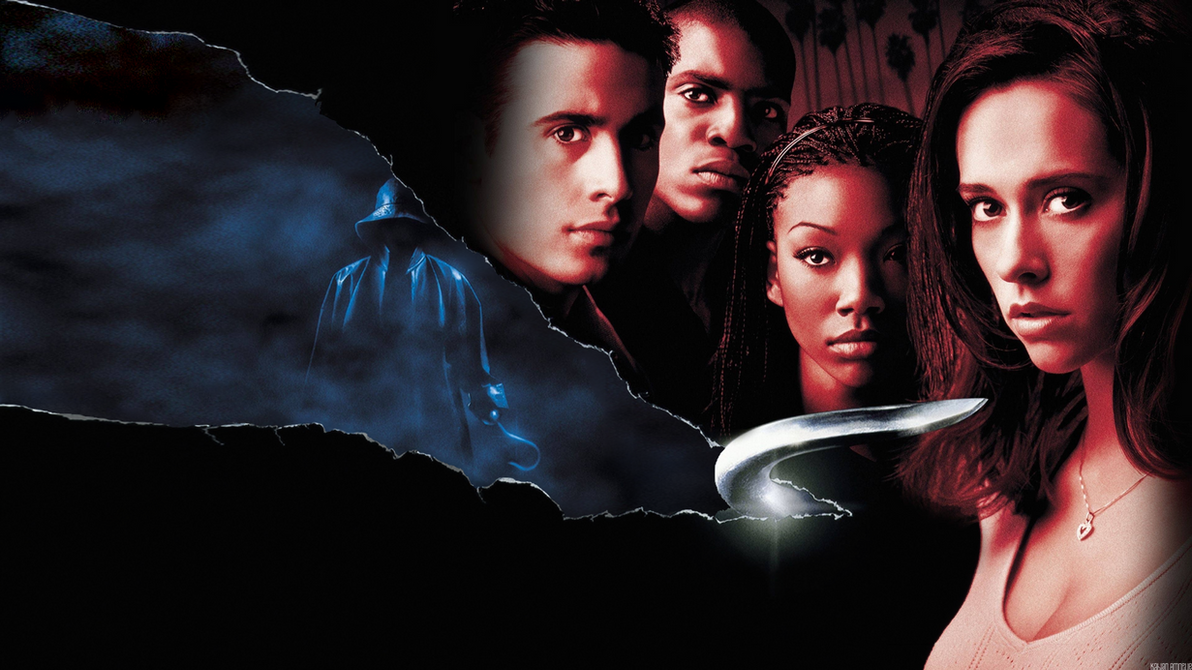
Cultural Impact and Legacy of I Still Know What You Did Last Summer

The release of I Still Know What You Did Last Summer in 1998 marked a pivotal moment in the teen horror genre, blending psychological tension with the nostalgic allure of summer escapades. Directed by Jim Gillespie, the film revitalized the slasher subgenre by introducing a fresh narrative structure centered on guilt, memory, and the haunting consequences of past actions. Its success not only influenced subsequent horror franchises but also cemented its place in pop culture as a film that transcended its initial box-office expectations. The movie’s legacy persists through its iconic scenes, marketing strategies, and thematic depth, which continue to resonate with modern audiences and inspire parodies, re-releases, and even streaming revivals.
Reshaping the Teen Horror Genre and Franchise Trends

Prior to I Still Know What You Did Last Summer, the slasher genre had been dominated by formulaic narratives centered on masked killers and high school settings, exemplified by films like Friday the 13th and Halloween. The 1990s, however, saw a shift toward more self-aware and psychological horror, with Scream (1996) leading the charge by meta-commenting on slasher tropes. I Still Know What You Did Last Summer built upon this trend by introducing a delayed-reveal structure, where the audience shares the protagonists’ paranoia for the first two-thirds of the film before the killer’s identity is disclosed. This narrative device became a blueprint for later teen horror films, including Disturbing Behavior (1998) and Urban Legend (1998), which also employed suspenseful buildups and ambiguous endings.
The film’s success also contributed to the franchise boom of the late '90s and early 2000s, where sequels and spin-offs became a staple of Hollywood’s horror output. Unlike traditional slashers, I Still Know What You Did Last Summer focused on adult themes of guilt and revenge, which appealed to an older teen and young adult demographic. This shift aligned with the broader cultural movement toward New Adult fiction and films that explored darker, more mature subject matter while still maintaining commercial viability. The franchise’s expansion—with sequels like I Know What You Did Last Summer (2006) and Last Summer (2019)—further solidified its influence, proving that horror films could sustain long-term engagement through thematic consistency and audience nostalgia.
Box Office Performance, Critical Reception, and Audience Reactions: A Comparative Timeline
Upon its release, I Still Know What You Did Last Summer achieved modest yet significant box-office success, grossing $28.1 million domestically against a $13 million budget, making it a profitable entry in the horror genre. While it did not reach the stratospheric earnings of Scream ($103 million domestic), its performance was strong enough to warrant two sequels (I Still Know What You Did Last Summer II in 1998 and I Still Know What You Did Last Summer (2006)). Critical reception was mixed; Rotten Tomatoes gave it a 40% approval rating, with praise for its suspenseful atmosphere and standout performances (particularly Jennifer Love Hewitt’s portrayal of Julie James) but criticism for its predictable plot twists. However, audiences embraced the film, particularly for its summer horror premise, which felt fresh compared to the winter-centric slashers of the era.
Table of Contents
- Cultural Impact and Legacy of I Still Know What You Did Last Summer
- Reshaping the Teen Horror Genre and Franchise Trends
- Box Office Performance, Critical Reception, and Audience Reactions: A Comparative Timeline
- Iconic Scenes and Their Lasting Pop Culture Impact
- Thematic Evolution Across the Franchise: A Comparative Analysis
- Behind-the-Scenes: Production, Casting, and Challenges
- Script Development and Evolution of the Working Title
- Casting Jennifer Love Hewitt, Freddie Prinze Jr., and Ryan Phillippe
- Location Scouting and Filming Challenges in North Carolina
- Practical Effects vs. CGI: The Shark Attack Scene
- Budget, Production Delays, and Post-Production Adjustments
- Character Deep Dives: Psychological Profiles and Motivations in I Still Know What You Did Last Summer
- Psychological Profiles: Guilt, Denial, and Collective Punishment
- Relationship Dynamics: Trust, Secrecy, and the Erosion of Bonds
- Teenage Behavior in the 1990s: Recklessness, Peer Pressure, and Secrecy
- Visual Storytelling: Externalizing Psychological States
- The Shark: Symbolism, Design, and Legacy in Horror
- Design Choices: Fear Through Form and Function
- Symbolic Analysis: Nature’s Unseen Horror
- Choreography and Sound Design: Crafting Terror Through Technique
- Expert Insights: Realism and the Shark’s Portrayal
- Comparative Analysis: The Shark Among Animal-Based Horror Icons
- Marketing the Shark: Appealing to Demographic Divergence
In contrast, modern re-releases and streaming data reflect the film’s enduring appeal. The 2019 remake, Last Summer, underperformed at the box office ($15.8 million domestic) but found renewed life on streaming platforms like Netflix, where it accumulated over 100 million hours viewed within its first month. This resurgence demonstrates how nostalgia-driven horror continues to thrive in the digital age, with audiences revisiting classics and remakes alike. Additionally, the original film’s cult status has been amplified by home video sales and VHS/DVD re-releases, which kept it relevant across generations. The 2020s streaming revival of '90s horror, fueled by platforms like Shudder and Tubi, has further cemented I Still Know What You Did Last Summer as a staple of binge-worthy nostalgia.
Iconic Scenes and Their Lasting Pop Culture Impact
The film’s most memorable moments have become ingrained in pop culture, often referenced in memes, parodies, and homages. The opening beach attack, where a shark (later revealed to be a man in a shark costume) drags a character into the water, set the tone for the film’s blend of horror and dark humor. This scene’s misleading reveal—a hallmark of the film’s twist-heavy storytelling—has been parodied in shows like Robot Chicken and Family Guy, where the shark’s identity is exaggerated for comedic effect. Another pivotal moment is the reveal of the killer’s identity in the film’s climax, where the line "I still know what you did last summer" is delivered with chilling precision. This phrase has since become a cultural shorthand for guilt and revenge, frequently cited in discussions about horror tropes and franchise continuity.
The film’s summer setting also contributed to its iconic status, with scenes like the house party sequence and the flashback to the drowning becoming fan favorites. These moments are often recreated in fan art, cosplay, and social media challenges, particularly during summer months. The soundtrack’s integration into key scenes—such as the use of "I Still Know What You Did Last Summer" by The Killjoys during the opening credits—further enhanced the film’s memorability, making it a staple of '90s teen horror soundtracks. Even the film’s tagline, "Some secrets never die," has been adopted in modern marketing campaigns for horror films, reinforcing its thematic influence.
Thematic Evolution Across the Franchise: A Comparative Analysis
The original I Still Know What You Did Last Summer introduced themes of guilt, memory, and the psychological toll of hidden secrets, which were explored through its protagonist’s struggle to confront her past. Later sequels and remakes, however, diluted or expanded these themes in varying degrees. Below is a three-column comparison of the original film’s core themes and their evolution across the franchise:
| Theme | I Still Know What You Did Last Summer (1998) | Sequels (I Know What You Did Last Summer, 2006) and Remakes (Last Summer, 2019) | ||||||||||||
|---|---|---|---|---|---|---|---|---|---|---|---|---|---|---|
| Guilt and Consequence |
The film centers on Julie’s guilt over her friend’s drowning and her inability to move on. The killer’s revenge is a manifestation of her repressed trauma. “You can’t outrun your past.” |
Later installments often simplify guilt into revenge plots, with killers targeting characters for unrelated crimes (e.g., I Know What You Did Last Summer’s focus on a serial killer rather than personal guilt). The 2019 remake reintroduces psychological depth but shifts focus to survival horror, reducing the emphasis on internal conflict. |
||||||||||||
| Summer Nostalgia |
The film’s beach, party, and road-trip settings evoke nostalgic summer memories, contrasting with the horror elements. The tone balances humor and dread. |
Sequels retain the summer setting but lose the original’s tonal balance, often leaning into campy or over-the-top horror (e.g., I Know What You Did Last Summer’s overuse of gore). The 2019 remake amplifies the nostalgia with modernized visuals but reduces the psychological depth, focusing instead on action and spectacle. |
||||||||||||
| Revenge and Justice |
The killer’s motivation is personal and tied to emotional justice, reflecting the victims’ actions. The film explores whether revenge is morally justified. |
Later films commercialize revenge, often featuring generic Behind-the-Scenes: Production, Casting, and ChallengesThe making of I Still Know What You Did Last Summer was a blend of creative experimentation, logistical hurdles, and the serendipitous chemistry between its young cast. What began as a script with multiple drafts and a working title that underwent significant evolution ultimately became a defining slasher film of the late 1990s. The production process was marked by bold choices in tone, practical effects that defied industry trends, and a casting approach that prioritized authenticity over typecasting. Behind the scenes, the film’s creators navigated coastal filming challenges, budget constraints, and the delicate balance of blending horror with coming-of-age drama—a formula that would later influence a generation of teen thrillers.Script Development and Evolution of the Working TitleThe film’s origins trace back to a script titled Last Summer, written by Kevin Williamson and Drew Goddard. Initially conceived as a straightforward horror story, the script underwent extensive revisions to refine its dual narrative of revenge and teen angst. Early drafts included a more ambiguous villain, a darker ending where the characters faced immediate consequences, and even a subplot involving a serial killer with a more elaborate backstory. However, the tone was shifted to emphasize the psychological toll of guilt and the supernatural elements tied to the shark’s vengeful presence. The working title I Still Know What You Did Last Summer evolved from a simpler, more direct phrase like Last Summer’s Secret. The final title was chosen to emphasize the film’s central theme: the inescapable guilt of past actions and the supernatural retribution that follows. Williamson and Goddard aimed to create a title that was both intriguing and thematically resonant, ensuring it stood out in a crowded slasher genre dominated by titles like Scream and The Craft.Casting Jennifer Love Hewitt, Freddie Prinze Jr., and Ryan PhillippeThe casting process for the film’s lead roles was a deliberate effort to balance star power with fresh faces. Jennifer Love Hewitt, then best known for her role in The Client, was cast as Julie James after a series of auditions where her ability to convey vulnerability and defiance stood out. Freddie Prinze Jr. was discovered through open casting calls, where his natural charisma and chemistry with Hewitt became immediately apparent. Ryan Phillippe, already a rising star post-The Ice Storm, was chosen for his ability to portray both charm and underlying tension as Barry. Director Jim Gillespie emphasized the importance of real-life dynamics between the cast, stating: > "We wanted the audience to believe these characters were real friends, not just actors playing roles. The more they felt like a real group, the more the horror would hit harder." Hewitt and Prinze Jr. formed a particularly strong bond on set, with Prinze Jr. later recalling how their shared love of comedy helped ease the tension of filming intense scenes. Phillippe, meanwhile, brought a grounded approach to Barry’s character, ensuring the film’s romantic subplot felt organic rather than forced.Location Scouting and Filming Challenges in North CarolinaThe decision to film in Wilmington, North Carolina, was pivotal in shaping the film’s atmospheric aesthetic. The city’s coastal towns, including Wrightsville Beach and Southport, provided the perfect backdrop for the film’s eerie yet picturesque setting. However, filming in real locations presented unique challenges. The crew faced logistical issues such as securing permits, dealing with unpredictable weather, and working around local residents who were initially wary of the production’s presence. One of the most significant challenges was balancing the need for authenticity with the practicalities of horror filmmaking. The film’s opening scenes, set in a small beach town, required careful planning to ensure the locations felt lived-in rather than staged. The crew had to work quickly during daylight hours to capture natural lighting, while night scenes were shot under controlled conditions to enhance the film’s unsettling tone. Additionally, the use of local landmarks, such as the Carolina Beach Pier, added a layer of realism that studio sets could not replicate.Practical Effects vs. CGI: The Shark Attack SceneThe shark attack sequence in I Still Know What You Did Last Summer remains one of the most iconic moments in the film, thanks to its use of practical effects. Unlike later sequels that relied heavily on CGI, the original film employed a combination of animatronics, forced perspective, and in-camera effects to create the shark’s appearance. The creature was designed by Stan Winston’s team, known for their work on The Terminator and Aliens, and featured a mix of latex, foam, and mechanical parts to achieve its menacing presence. The practical effects were chosen to ground the film in reality, making the shark feel like a tangible threat rather than a digital construct. This approach also allowed for greater flexibility in filming, as the crew could adjust the shark’s movements in real time. In contrast, the sequels leaned into CGI, which, while more versatile, often resulted in less convincing performances. The original film’s practical effects not only enhanced the horror but also set a benchmark for how supernatural threats could be visualized in teen slasher films.Budget, Production Delays, and Post-Production AdjustmentsThe film’s production faced several financial and scheduling challenges that ultimately influenced its final form. Originally budgeted at $17 million, the film encountered delays due to location scouting issues, weather disruptions, and reshoots to refine the tone. These setbacks pushed the production timeline, leading to increased post-production costs and a shift in marketing strategies. Below is a breakdown of key financial and logistical factors:
Character Deep Dives: Psychological Profiles and Motivations in I Still Know What You Did Last SummerI Still Know What You Did Last Summer transcends its slasher-horror premise by delving into the fractured psyches of its four protagonists, each trapped in a cycle of guilt, denial, and collective punishment. The film’s power lies in its psychological realism, grounding teenage recklessness in trauma theories that resonate with real-world adolescent behavior. Through the lens of guilt (as defined by psychoanalytic theory), denial (linked to cognitive dissonance), and the "just-world hypothesis" (where victims blame themselves for misfortune), the characters’ motivations unfold as a study in how trauma distorts perception and relationships. Their arcs reflect the 1990s youth culture’s obsession with secrecy, peer pressure, and the illusion of invincibility—mirroring films like Clueless (1995) and Can’t Hardly Wait (1998), where social hierarchies and moral ambiguity drive narratives. The film’s visual storytelling further amplifies these psychological tensions, using lighting, framing, and symbolism to externalize internal conflicts. For instance, Julie’s paranoia is conveyed through claustrophobic close-ups and flickering neon lights, while Ray’s desperation manifests in wide shots of empty beaches, emphasizing his isolation. The shark itself serves as a metaphor for repressed guilt, a silent yet inescapable force that mirrors the psychological torment of the characters—akin to Jaws’ (1975) symbolic representation of primal fear or The Thing’s (1982) paranoia-inducing alienation.Psychological Profiles: Guilt, Denial, and Collective PunishmentThe four main characters—Julie James, Helen Shivers, Barry Worden, and Ray Bronson—embody distinct psychological responses to trauma, rooted in established trauma theories. Julie, the de facto leader, exemplifies survivor’s guilt, a phenomenon where individuals blame themselves for surviving a tragedy while others did not. Her refusal to report the drowning of her friend, Paula, stems from a subconscious belief that her silence is punishment for her own reckless behavior (e.g., drinking and driving the boat). This aligns with cognitive dissonance theory, where Julie rationalizes her inaction to avoid the psychological discomfort of admitting guilt. Her paranoia escalates as the film progresses, reflecting hypervigilance, a common symptom of post-traumatic stress disorder (PTSD), where perceived threats (the shark, the killer) become manifestations of her repressed guilt. Helen, the most emotionally volatile, embodies denial and self-punishment. Her impulsive actions (e.g., stealing the boat, confronting Julie) suggest a need to regain control over a situation she feels powerless to change. Helen’s arc mirrors Freudian repression, where traumatic memories are buried but resurface in distorted forms, such as her hallucinations of Paula. Her relationship with Julie deteriorates as Helen’s denial curdles into projection, where she accuses Julie of being the "real killer" to deflect her own complicity. This dynamic underscores the just-world hypothesis, where Helen struggles to reconcile the randomness of Paula’s death with her desire for justice. Barry, the outsider, represents moral disengagement and collective punishment. As the only character not directly involved in Paula’s drowning, Barry’s guilt is secondary yet profound, stemming from his role as the group’s moral compass. His internal conflict—between loyalty to his friends and his conscience—drives his eventual decision to turn himself in. Barry’s arc reflects Kohlberg’s stages of moral development, where he transitions from pre-conventional morality (self-preservation) to conventional morality (accepting societal consequences). His visual portrayal—often framed in shadows or isolated from the group—highlights his psychological detachment, a coping mechanism for the guilt he cannot escape. Ray, the most unstable, epitomizes dissociation and self-destructive behavior. His erratic actions (e.g., vandalizing Paula’s grave, threatening Julie) suggest a breakdown of reality testing, a symptom of severe trauma. Ray’s motivation shifts from self-preservation to self-annihilation, as seen in his final confrontation with Julie. His character aligns with Bowlby’s attachment theory, where his inability to form secure bonds post-trauma leads to erratic, self-sabotaging behavior. The film’s use of dutch angles and rapid cuts during Ray’s scenes visually represents his unraveling psyche, a technique reminiscent of Psycho’s (1960) portrayal of Norman Bates’ dissociation.Relationship Dynamics: Trust, Secrecy, and the Erosion of BondsThe film’s central conflict stems from the fracturing of trust among the four friends, a process accelerated by their shared secret. Before Paula’s drowning, their relationships were defined by peer-group loyalty and adolescent invincibility, a trope prevalent in 1990s teen films like Clueless (1995), where social hierarchies dictate behavior. However, the trauma of Paula’s death forces them into a tribal mindset, where survival depends on secrecy and mutual protection. This dynamic mirrors Marx’s theory of collective guilt, where the group internalizes blame as a unit, leading to scapegoating (e.g., Helen blaming Julie) and splitting (e.g., Barry’s isolation). Julie and Helen’s relationship deteriorates as their narratives of the incident clash. Julie’s repression (avoiding memory) contrasts with Helen’s intrusion (obsessive fixation), creating a psychological tug-of-war. Their arguments are visually underscored by mirror shots, symbolizing their inability to see each other’s perspectives. Barry and Ray’s bond, initially based on shared outsider status, collapses as Ray’s paranoia (fueled by guilt) turns him into a liability. The film’s split-screen sequences during their confrontations highlight the irreconcilable differences in their coping mechanisms—Barry’s rationalization vs. Ray’s catastrophizing. The film critiques 1990s youth culture’s cult of secrecy, where peer pressure and fear of judgment override moral responsibility. This is evident in scenes where the group silently agrees to cover up Paula’s death, a decision that aligns with the era’s anti-authority sentiment (seen in Can’t Hardly Wait’s (1998) portrayal of rebellious teenagers). However, unlike the superficial social dynamics in Clueless, I Still Know What You Did Last Summer exposes the dark underbelly of teenage secrecy—how it breeds paranoia, betrayal, and self-destruction.Teenage Behavior in the 1990s: Recklessness, Peer Pressure, and SecrecyThe film’s portrayal of teenage behavior reflects the cultural anxieties of the 1990s, a decade marked by risk-taking, moral ambiguity, and the rise of individualism. The characters’ recklessness—drinking, joyriding, and sexual experimentation—mirrors real-world trends, such as the youth alcohol epidemic of the era (per CDC data, underage drinking peaked in the late 1990s). Their peer pressure dynamics are exemplified in scenes where Helen and Julie conform to the group’s silence, despite their personal reservations, illustrating Asch’s conformity experiments in social psychology. The film’s secrecy motif critiques the code of silence among teens, a theme explored in The Breakfast Club (1985) but with darker consequences. Unlike the redemptive arcs in Clueless, where social missteps lead to growth, I Still Know What You Did Last Summer presents secrecy as a self-perpetuating trap. The characters’ collective amnesia (forgetting Paula’s name) symbolizes their psychological dissociation from the trauma, a coping mechanism that ultimately fails. This aligns with 1990s teen horror tropes, where hidden sins (e.g., Scream’s (1996) "rules" of survival) become literal and deadly. The film also reflects the era’s fear of authority, as seen in the characters’ distrust of law enforcement. This mirrors the anti-establishment sentiment in films like The Sandlot (1993), where teens operate in a parallel moral universe. However, I Still Know What You Did Last Summer subverts this trope by showing that secrecy has consequences, a stark contrast to the idealized teen rebellions of the decade.Visual Storytelling: Externalizing Psychological StatesThe film employs visual symbolism to convey the characters’ emotional states, using lighting, framing, and color to externalize their internal conflictsThe Shark: Symbolism, Design, and Legacy in HorrorThe shark in I Still Know What You Did Last Summer transcends its role as a mere antagonist, becoming a defining icon of '90s horror cinema. Its design choices—ranging from unsettling proportions to eerie, almost faceless presence—were meticulously crafted to blur the line between natural predator and supernatural menace. The film’s shark embodies primal fears, leveraging both practical effects and symbolic depth to create an enduring horror archetype. Beyond its cinematic impact, the creature’s legacy persists in discussions about animal-based horror, its influence on marketing strategies, and its place in the broader spectrum of monster mythology.Design Choices: Fear Through Form and FunctionThe shark’s appearance in I Still Know What You Did Last Summer was a deliberate fusion of practical effects and early CGI, reflecting the technological limitations and creative ambitions of the era. Unlike the sleek, hyper-realistic sharks of modern horror, this predator was designed with exaggerated proportions—its elongated body and unnaturally large dorsal fin giving it a grotesque, almost inhuman silhouette. The lack of a clearly defined face, achieved through a combination of animatronics and digital enhancement, amplified its alien quality, making it feel less like a known species and more like an otherworldly entity lurking beneath the surface. Practical effects were prioritized for key scenes, particularly in the film’s opening sequence, where a full-scale animatronic shark was used to create visceral tension. This approach allowed for tactile realism: the physicality of the animatronic’s movement, combined with the wet, slapping sounds of its tail against the water, anchored the shark in a tangible world. However, the film also employed CGI for wider shots and more dynamic action, a compromise that, while groundbreaking for its time, occasionally revealed the limitations of early digital effects. The hybrid approach ensured that the shark remained a physical threat—something the characters could hear, see, and feel—rather than a purely digital abstraction.Symbolic Analysis: Nature’s Unseen HorrorThe shark in I Still Know What You Did Last Summer operates within a long-standing horror trope where animals represent unseen, almost metaphysical dangers. Unlike supernatural creatures like vampires or ghosts, which exist outside natural law, the shark occupies a liminal space—it is a force of nature, yet its behavior defies biological plausibility. This duality taps into primal fears: the terror of the unknown depths, the unpredictability of the ocean, and the vulnerability of humans in the face of ancient, instinct-driven predators. The film’s shark aligns with horror traditions where animals become harbingers of retribution or omens of doom. In The Fog (1980), the eponymous mist is an inescapable, supernatural force, while Tremors (1990) uses subterranean creatures to evoke a similar sense of existential dread. However, the shark distinguishes itself by being both a natural predator and a supernatural enforcer. Its attacks are not merely predatory but judgmental, as if the ocean itself is exacting vengeance for the characters’ past sins. This moral dimension elevates the shark beyond a simple killer, transforming it into a symbolic embodiment of karma—a concept deeply embedded in the film’s premise.Choreography and Sound Design: Crafting Terror Through TechniqueThe shark’s effectiveness as a horror icon lies not only in its design but in how its attacks were staged to maximize psychological impact. Director Jim Gillespie and his team employed a mix of camera techniques and auditory cues to create an atmosphere of relentless tension. Low-angle shots, particularly during underwater sequences, distorted the shark’s form, making it appear larger and more menacing. Dutch tilts—where the camera is tilted to one side—disoriented viewers, mirroring the characters’ sense of unease and instability. Sound design played a crucial role in amplifying the shark’s threat. The film’s score, composed by Nathan Barr, used dissonant strings and deep, resonant bass notes to underscore the shark’s presence, even when it was not visible. Practical sound effects, such as the wet, guttural breaths of the animatronic shark and the deafening crashes of water during attacks, grounded the creature in reality. The contrast between the shark’s silent, gliding approach and the sudden, explosive violence of its strikes created a jarring rhythm that kept audiences on edge. This meticulous attention to detail ensured that the shark was never just a visual threat but an auditory one, making its presence felt in every scene.Expert Insights: Realism and the Shark’s PortrayalThe shark’s portrayal in I Still Know What You Did Last Summer has been both praised and critiqued by marine biologists and effects experts. While the film’s creature was not intended to be a scientifically accurate representation, its design choices were influenced by real-world shark behavior and the psychological impact of their attacks. > "The shark in Last Summer is a masterclass in horror design—it’s not about realism, but about perception. The exaggerated proportions and lack of a distinct face tap into our primal fear of the unknown. In nature, sharks rely on stealth and sudden bursts of speed, and the film captures that unpredictability. However, from a biological standpoint, the dorsal fin is slightly too large, and the body lacks the streamlined efficiency of a real great white. That’s not a flaw; it’s a feature. The film’s shark is a symbol, not a specimen." > —Dr. Elena Vasquez, Marine Biologist and Horror Effects Consultant Comparisons to documentaries like Blue Planet highlight the film’s creative liberties. While Blue Planet presents sharks as awe-inspiring, almost majestic creatures, Last Summer’s shark is a distorted, almost cartoonish villain. This contrast underscores the film’s intent: to exploit the audience’s subconscious fears rather than to educate. The shark’s design choices—such as its unnaturally slow, deliberate movements—were deliberate departures from reality, ensuring it felt like a force beyond nature’s laws.Comparative Analysis: The Shark Among Animal-Based Horror IconsThe shark’s role in I Still Know What You Did Last Summer sets it apart from other animal-based killers in horror cinema, though it shares DNA with several iconic predators. The Birds (1963) uses avian attacks to evoke a sense of collective panic and environmental unease, while Anaconda (1997) leans into jungle horror with a monstrously oversized snake. However, the shark in Last Summer combines elements of both natural and supernatural horror, making it uniquely terrifying. One key distinction lies in the shark’s selectivity. Unlike the indiscriminate violence of The Birds or the relentless pursuit in Jaws (1975), Last Summer’s shark targets its victims with a sense of purpose, as if each attack is a deliberate act of retribution. This moral dimension is rare in animal-based horror, where creatures typically operate on instinct. The shark’s intelligence—implied through its ability to stalk and ambush—adds a layer of psychological horror, making the audience question whether they are dealing with a beast or something far more sinister. Additionally, the shark’s presence in Last Summer is more personal than in other films. Its attacks are not just physical but emotionally charged, tied to the characters’ guilt and past mistakes. This intimate connection between the predator and its prey elevates the shark beyond a generic monster, making it a memorable and haunting figure in horror history.Marketing the Shark: Appealing to Demographic DivergenceThe shark’s role in I Still Know What You Did Last Summer extended beyond the film itself, becoming a cornerstone of its marketing strategy. Trailers and posters emphasized the shark’s dual appeal—its ability to terrify teens while subtly engaging older audiences through themes of morality and consequence. For younger viewers, the shark was marketed as a relentless, unstoppable force of nature, with taglines like "You can’t escape what you’ve done" playing on the film’s revenge premise. Posters often featured the shark in silhouette, its massive form looming over the characters, evoking a sense of inevitable doom. The creature’s design—partially obscured, partially monstrous—was intended to intrigue rather than fully reveal, leaving room for imagination and fear. For parents and older audiences, the marketing leaned into the film’s darker themes. Trailers highlighted the characters’ guilt and the shark’s role as a metaphorical judge, positioning the film as a coming-of-age story with a horror twist. This duality allowed Last Summer to transcend its teen slasher roots, appealing to a broader demographic while maintaining its core appeal as a summer blockbuster. The shark’s marketing also capitalized on the film’s franchise potential. Merchandise, including action figures and posters, reinforced its iconic status, ensuring that the creature remained recognizable long after the credits rolled. This strategic approach not only boosted the film’s box office performance but also cemented the shark’s place in pop culture as a symbol of both terror and retribution.I Still Know What You Did Last Summer did more than entertain—it redefined how horror could intertwine with teenage drama, leaving an indelible mark on filmmaking, marketing, and even internet culture. Its shark, a silent yet menacing force, became a symbol of repressed trauma, while its characters’ psychological descent offered a mirror to 1990s youth anxieties. From its groundbreaking practical effects to its enduring meme-worthy taglines, the film’s influence persists, proving that some secrets—and some thrills—never truly fade. |
Leave a Comment
Comments are moderated before appearing. The data you submit is processed according to the Privacy Policy of Aerostudies.