What Time Is It In London Right Now Explained With Global Time Zone Insights
London’s clock ticks differently than most cities, blending history with modern precision as the world’s timekeeping benchmark. From the iconic chimes of Big Ben to the silent shifts between GMT and BST, understanding the capital’s time zone reveals how a single adjustment can ripple across global markets, travel plans, and even agricultural harvests. The story of time in London is not just about seconds and minutes—it’s a narrative of standardization, economic strategy, and cultural identity that continues to shape daily life in ways often overlooked until a flight is missed or a stock trade goes unnoticed.
The concept of time zones emerged from the chaos of the 19th century, when railways and telegraphs demanded synchronization across continents. London, as the heart of the British Empire, became the anchor for GMT, a system now governed by Coordinated Universal Time (UTC) that dictates everything from financial trading hours in Tokyo to the opening times of Sydney’s coffee shops. Yet, even today, nuances like British Summer Time—introduced to prolong evening daylight for farmers and leisure—create confusion for travelers and professionals alike. While tools like Google Search or smartwatch widgets now offer instant answers to What Time Is It In London Right Now, the deeper implications of these time shifts remain a puzzle for many.

Understanding Time Zones and Their Global Impact
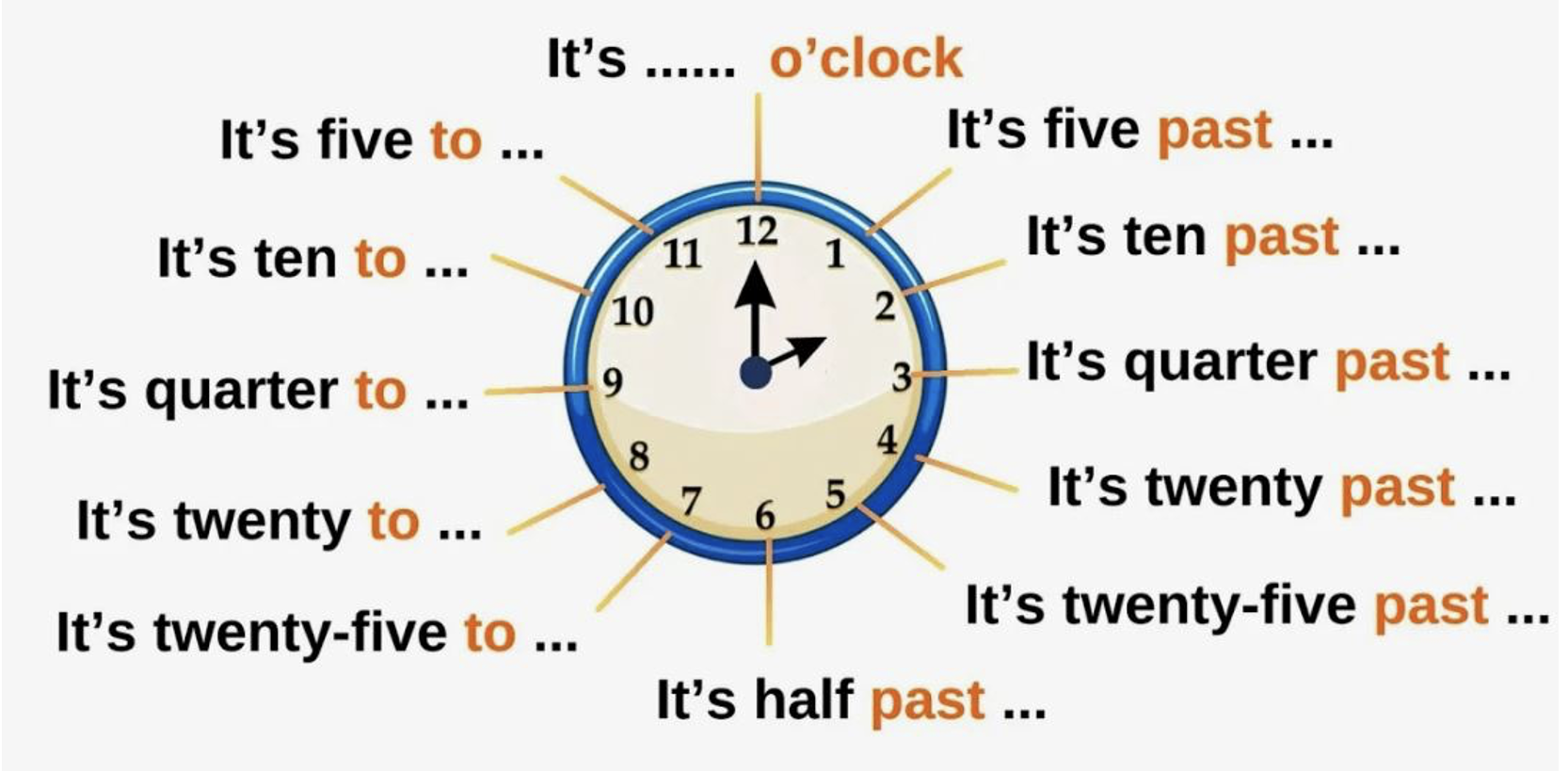
Time zones serve as an invisible yet critical framework that synchronizes human activity across the globe, shaping everything from financial transactions to agricultural harvests. Originating from the need to standardize timekeeping as railroads expanded in the 19th century, the modern system of time zones was formalized at the International Meridian Conference in 1884, where 25 nations agreed to divide the world into 24 time zones, each spanning 15 degrees of longitude, aligned with Greenwich Mean Time (GMT). This system evolved into the Coordinated Universal Time (UTC), a high-precision atomic time standard that underpins global navigation, aviation, and digital communication. Today, time zones influence trillions of dollars in trade, coordinate international travel for over 1.4 billion annual passengers, and determine the sleep-wake cycles of remote workers in multinational corporations. The complexity of these adjustments—whether for a stock trader in Tokyo or a farmer in California—highlights how deeply time zones are embedded in modern life, often without conscious recognition.
Historical Development and Standardization of Time Zones

The concept of time zones emerged from practical necessity rather than theoretical design. Before standardization, cities relied on local solar time, calculated by the sun’s position, leading to discrepancies even within short distances. The Great Railway Time Convention of 1883 in the U.S. was a turning point, dividing the country into four time zones to prevent train collisions. This system was later adopted globally, with the Prime Meridian (0° longitude) at Greenwich, England, chosen as the reference point due to its dominance in maritime navigation.
The International Date Line, established near the 180th meridian, further refined the system by designating where calendar dates change. However, exceptions exist for political or logistical reasons—such as Samoa’s 2011 decision to skip a day, moving from -11 UTC to +13 UTC to align with neighboring Australia and boost tourism. This shift, though controversial, underscored how time zones can reshape cultural and economic identities.
Coordinated Universal Time (UTC) and Modern Timekeeping
UTC, adopted in 1967, replaces GMT as the global time standard, offering precision measured by atomic clocks in laboratories worldwide. Unlike GMT, which is based on Earth’s rotation, UTC accounts for irregularities in Earth’s speed, introducing leap seconds approximately every 1–2 years to maintain accuracy. This system is critical for: - GPS navigation, where a 1-second error could misplace users by 435 miles (700 km). - Financial markets, where trades occur in milliseconds. - Aviation and shipping, where synchronized clocks prevent collisions.
Table of Contents
- Understanding Time Zones and Their Global Impact
- Historical Development and Standardization of Time Zones
- Coordinated Universal Time (UTC) and Modern Timekeeping
- Daily Life Adjustments: Work, Travel, and Communication
- Comparative Table of Major Time Zones and UTC Offsets
- Challenges in Remote Work, Education, and Multinational Operations
- Financial Markets and the 24-Hour Trading Cycle
- London’s Time Zone: GMT, BST, and the Nuances of British Time
- Historical Evolution of London’s Time Zone from Pre-Industrial Era to GMT Adoption
- Introduction and Purpose of British Summer Time (BST)
- Economic and Social Benefits of British Summer Time
- Exceptions and Special Cases in London’s Time Zone
- Comparison: UK’s BST vs. EU’s Daylight Saving Time Policy
- Verifying London’s Current Time Using Astronomical Methods
- Tools and Methods to Check London’s Current Time Instantly
- Google Search Function for Real-Time London Time
- Popular Time-Checking Websites and Customization Features
- Setting Up Widgets and Apps to Display London’s Time
- Comparison of Free vs. Paid Time-Tracking Tools
- Cultural and Practical Implications of London’s Time Zone
- Global Business Hub and Financial Trading Overlaps
- Tourism and the Seasonal Shift Between GMT and BST
- Sports Broadcasting and the Premier League’s Global Appeal
- Media Industry: Prime-Time Scheduling and Cultural Narratives
UTC is the backbone of Internet protocols (NTP) and cryptographic systems, ensuring data integrity across global networks. Most devices default to UTC before applying local offsets, making it the universal reference for digital timekeeping.
Daily Life Adjustments: Work, Travel, and Communication
Time zones create a 24/7 global economy, but their mismatches introduce challenges: - Work schedules: A software developer in San Francisco (UTC-7/-8) collaborating with a team in Berlin (UTC+1/+2) may face a 9-hour gap, requiring asynchronous communication tools like Slack or Trello. - International travel: Jet lag affects 30% of frequent flyers, with symptoms worsening during eastbound travel due to the body’s circadian rhythm resistance to delayed sleep schedules. - Education: Online courses often schedule live sessions during overlapping hours, such as 9 AM UTC for European students and 5 PM UTC for North American participants, using platforms like Zoom to bridge gaps.
Real-world example: The European Union’s GDPR compliance teams operate across three time zones (UTC+1 to UTC+3), requiring staggered shifts to ensure 24/7 monitoring of data requests.
Comparative Table of Major Time Zones and UTC Offsets
The following table outlines key time zones, their UTC offsets, and daylight saving adjustments (where applicable). Daylight Saving Time (DST) typically shifts clocks forward by 1 hour during summer months, affecting regions like North America and Europe.
| City | Time Zone | UTC Offset (Standard) | UTC Offset (Daylight Saving) | DST Period (Approx.) | Key Industries Affected |
|---|---|---|---|---|---|
| New York, USA | Eastern Time (ET) | UTC-5 | UTC-4 | March–November | Finance, Technology, Media |
| London, UK | Greenwich Mean Time (GMT) | UTC+0 | UTC+1 (BST) | March–October | Banking, Aviation, Retail |
| Tokyo, Japan | Japan Standard Time (JST) | UTC+9 | No DST | N/A | Manufacturing, Electronics, Stock Markets |
| Sydney, Australia | Australian Eastern Time (AEST) | UTC+10 | UTC+11 (AEDT) | October–April | Agriculture, Mining, Tourism |
| São Paulo, Brazil | Brasília Time (BRT) | UTC-3 | No DST (since 2019) | N/A | Oil, Agriculture, Logistics |
| Moscow, Russia | Moscow Time (MSK) | UTC+3 | No DST (since 2014) | N/A | Energy, Defense, Technology |
Note: Time zone abbreviations like EST (Eastern Standard Time) or CET (Central European Time) are often used colloquially but can cause confusion during DST transitions.
Challenges in Remote Work, Education, and Multinational Operations
The rise of remote work has amplified time zone disparities, particularly in tech and customer support sectors. Companies like GitLab and Automattic employ asynchronous workflows, where employees document progress in shared tools and communicate via recorded messages to accommodate 12+ hour gaps. However, real-time collaboration remains difficult: - Synchronous meetings often default to the earliest convenient time, favoring employees in earlier time zones and leading to burnout for those in later zones. - Example: A San Francisco-based startup with teams in Bangalore (UTC+5:30) and Berlin (UTC+1/+2) may schedule stand-ups at 9 AM PT (UTC-7), forcing Bangalore employees to start at 11:30 PM local time.
Education faces similar hurdles. Massive Open Online Courses (MOOCs) like those on Coursera or edX often require fixed live session times, disadvantaging students in regions with conflicting schedules. Institutions are adopting hybrid models, combining pre-recorded lectures with optional live Q&A sessions.
Multinational corporations must also navigate legal and tax deadlines. For instance, a supply chain manager coordinating shipments between Los Angeles (UTC-7/-8) and Shanghai (UTC+8) must account for 16-hour differences during winter, requiring 24/7 monitoring tools like SAP or Oracle SCM.
Financial Markets and the 24-Hour Trading Cycle
Time zones dictate the sequential opening and closing of global stock exchanges, creating a rolling market cycle that begins in Asia (Tokyo at 9 AM JST/UTC+9) and ends in North America (New York at 4 PM ET/UTC-4). The overlap between London (8 AM–4:30 PM GMT/UTC+0) and New York (
London’s Time Zone: GMT, BST, and the Nuances of British Time
London’s relationship with time is a blend of historical pragmatism and modern adaptation, encapsulated in its dual-time system: Greenwich Mean Time (GMT) and British Summer Time (BST). While GMT serves as the standard reference point year-round, BST introduces a one-hour shift during summer months, extending daylight hours for economic and social benefits. This system reflects broader global trends in timekeeping but also highlights the UK’s unique approach, particularly post-Brexit, where it diverged from the European Union’s unified daylight-saving policy. Understanding the evolution, purpose, and exceptions of GMT and BST reveals how London’s time zone balances tradition with contemporary needs, from agricultural efficiency to energy conservation.
Historical Evolution of London’s Time Zone from Pre-Industrial Era to GMT Adoption
Before standardized timekeeping, London operated under local solar time, where each town adjusted clocks based on the sun’s position at noon. This led to inconsistencies—Big Ben’s time in 1852 could vary by 20 minutes across the city. The Railway Time system was introduced in 1840, synchronizing clocks to GMT for railway schedules, but it wasn’t universally adopted until the International Meridian Conference of 1884. At this conference, held in Washington, D.C., GMT was designated as the prime meridian (0° longitude), the global reference for time zones. London’s adoption of GMT solidified its role as the world’s timekeeping benchmark, though the transition was gradual, with maritime and industrial sectors leading the shift.
The Royal Observatory in Greenwich became the epicenter of this change. In 1880, the British Association for the Advancement of Science officially recommended GMT for national use, and by 1888, British law mandated its adoption for all public clocks and railways. This decision was not just scientific but also strategic—Greenwich’s longitude (0°) aligned with the UK’s colonial and maritime dominance, ensuring London’s time dictated global schedules. The Meridian Line at Greenwich Park, established in 1851, symbolized this authority, though its cultural significance often overshadows its technical role in time standardization.
Introduction and Purpose of British Summer Time (BST)
British Summer Time was first introduced during World War I, when the British Summer Time Act 1916 moved clocks forward by one hour on 21 May 1916, starting at 2:00 AM GMT. The primary goal was to conserve coal—a critical resource during wartime—by reducing the need for artificial lighting in the evening. The policy was so effective that it was made permanent in 1925 under the British Summer Time Act, with clocks moving forward on the last Sunday in March and back on the last Sunday in October. The original justification expanded to include agricultural productivity and leisure benefits, as longer evenings allowed farmers to work later and families to enjoy outdoor activities.
The economic rationale for BST gained further traction in the 1970s energy crisis, when the UK reaffirmed its commitment to daylight saving. The Summer Time Act 1972 codified the practice, though it left room for annual reviews. A notable debate arose in the 1990s over whether BST should be extended to double daylight saving (two-hour shift), but public opposition and logistical challenges led to its abandonment. Today, BST remains a seasonal adjustment rather than a permanent shift, with its start and end dates subject to periodic government reviews.
The Summer Time Act 1972 established BST as a permanent feature of British life, balancing energy savings with public convenience. However, the 2018 UK government consultation proposed ending the biannual clock changes entirely, reflecting a broader EU-wide debate on daylight saving. The UK ultimately chose to retain BST post-Brexit, citing tourism benefits and reduced road traffic accidents during longer evenings.
Economic and Social Benefits of British Summer Time
The adoption of BST has yielded measurable advantages across multiple sectors. Economically, studies suggest that BST reduces evening electricity demand by shifting peak usage to daytime, when solar and wind energy production is higher. A 2016 study by the London School of Economics estimated that BST saves the UK £1 billion annually in energy costs, though critics argue modern energy grids may mitigate this benefit. Socially, BST extends retail trading hours and outdoor leisure time, particularly in tourism-heavy regions like London. The British Tourist Authority reported a 7% increase in evening tourist activity during BST periods, with restaurants and museums seeing higher footfall.
Health and safety also benefit from longer daylight. Research from the University of Manchester found that BST reduces road traffic fatalities by approximately 200 per year in the UK, as visibility improves during commuting hours. Additionally, BST aligns with natural circadian rhythms, potentially improving mental health by reducing seasonal affective disorder (SAD) symptoms during darker winter months. However, the transition periods—when clocks change—have been linked to short-term disruptions, including increased heart attacks and workplace accidents, as documented in a 2018 study published in Current Biology.
Exceptions and Special Cases in London’s Time Zone
While London adheres to GMT/BST, overseas territories and dependencies often follow different rules. The Channel Islands (Jersey and Guernsey), for example, do not observe BST and remain on GMT year-round, a decision influenced by their proximity to France (which also uses CET/CEST). Similarly, British Overseas Territories like the Falkland Islands (GMT-3) or Bermuda (AST/EDT) operate on their own time zones, reflecting geographic isolation rather than London’s directives.
The Isle of Man and Gibraltar observe BST, aligning with the UK mainland, but South Georgia and the South Sandwich Islands use GMT-2 without daylight saving. These variations highlight the decentralized nature of timekeeping in the British Isles, where historical, economic, and logistical factors often dictate local policies. Even within the UK, Northern Ireland and Scotland follow BST without deviation, though debates persist over whether Scotland should opt out due to its northern latitude, where daylight hours vary less dramatically.
Channel Islands (Jersey/Guernsey) use GMT year-round, while Gibraltar switches to BST, demonstrating how proximity to continental Europe influences time zone decisions. The Falkland Islands remain three hours behind GMT, a relic of their remote Atlantic location.
Comparison: UK’s BST vs. EU’s Daylight Saving Time Policy
Before Brexit, the UK followed the EU’s Directive 2000/84/EC, which mandated daylight saving across member states. However, the UK’s independence from EU time policies post-2020 allowed it to retain BST while the EU considered abolishing clock changes entirely by 2021 (a plan later delayed). The UK’s decision to keep BST reflects its unique geographic and economic priorities, particularly in tourism and retail. Unlike the EU, which proposed permanent CEST (UTC+2), the UK maintains flexibility, with the Department for Business, Energy & Industrial Strategy (BEIS) periodically reviewing the policy.
Other European nations handle daylight saving differently: - Germany, France, Spain: Follow EU rules (UTC+1 in winter, UTC+2 in summer). - Portugal: Uses WET (UTC+0) in winter and WEST (UTC+1) in summer, but has debated permanent standard time. - Russia: Abolished DST in 2014, remaining on MSK (UTC+3) year-round. - Turkey and Iceland: Do not observe DST, despite their northern latitudes.
The UK’s approach contrasts with Scandinavia, where countries like Finland and Sweden have experimented with permanent daylight time to maximize summer benefits. Meanwhile, Iceland—despite its high latitude—does not observe DST, as its proximity to the Arctic Circle means daylight variations are extreme year-round.
Verifying London’s Current Time Using Astronomical Methods
Before mechanical clocks, Londoners relied on sundials and astronomical observations to determine local time. Today, these methods remain a fascinating way to cross-verify GMT/BST. The simplest astronomical approach is observing the sun’s position at solar noon (when the sun is at its highest point in the sky). In London (latitude 51.5°N), solar noon typically occurs around 12:25 PM GMT in winter and 11:30 AM GMT in summer due to the equation of time (Earth’s elliptical orbit and axial tilt). To adjust for this: 1. Find solar noon by noting when a sund
Tools and Methods to Check London’s Current Time Instantly
The ability to check London’s time accurately in real time is essential for travelers, remote workers, and those coordinating across time zones. Digital tools have evolved to make this process seamless, from simple web searches to advanced APIs and smart device integrations. Below are the most effective methods to retrieve London’s current time instantly, including their functionalities, customization options, and technical implementations.
Google Search Function for Real-Time London Time
Google’s search engine provides an efficient, no-frills way to check London’s time without requiring additional tools. The search function interprets queries like "time in London" or "current time in London" by pulling data from Google’s servers, which sync with time zone databases updated in real time.
For optimal results: - Basic Query: Typing "time in London" returns the current local time in London, including the time zone abbreviation (e.g., GMT or BST during daylight saving). - Precise Query: Adding "current" (e.g., "current time in London") ensures the most up-to-date result, as Google prioritizes fresh data for such queries. - Time Zone Clarification: If the result shows an ambiguous time (e.g., during transitions between GMT and BST), appending "UK" (e.g., "time in London UK") refines the search to avoid confusion with other locations named London.
Google’s algorithm accounts for daylight saving adjustments automatically, eliminating manual calculations. However, users should verify results during transitions (e.g., late March or late October) by cross-referencing with dedicated time-tracking websites.
Popular Time-Checking Websites and Customization Features
Dedicated time-tracking platforms offer advanced features beyond basic time displays, including world clock comparisons, historical time data, and customizable alerts. Two of the most widely used platforms are timeanddate.com and worldtimebuddy.com, each providing unique tools tailored for London’s time zone.
timeanddate.com - World Clock Feature: Users can add London to a customizable world clock by selecting "Add City" and searching for "London, UK." The clock displays GMT/BST dynamically and includes a countdown to daylight saving transitions. - Time Zone Converter: The converter allows comparisons between London and other cities, useful for scheduling international calls or meetings. Users can save frequently accessed pairs for quick access. - Sunrise/Sunset Data: Integrated with London’s geographical coordinates, this feature shows sunrise/sunset times, which are critical for planning outdoor activities or adjusting artificial lighting in smart homes. - Historical Time Data: For research or planning, users can view London’s time history, including past and future daylight saving changes.
worldtimebuddy.com - Visual Time Zone Map: The platform generates an interactive map where London’s time is highlighted alongside other selected locations. This is particularly useful for teams managing global operations. - Meeting Planner: Users can schedule meetings by inputting London’s time and receiving a visual overlap with other time zones, complete with suggested meeting times. - Mobile App: The companion app syncs with the web version, allowing users to toggle between London’s time and their local time with a single tap. Notifications for daylight saving changes are included.
Both platforms support dark mode and offer API access for developers, enabling integration into custom applications. For travelers, the mobile apps can be set as the default clock on devices, ensuring London’s time remains visible without manual updates.
Setting Up Widgets and Apps to Display London’s Time
For users who require constant visibility of London’s time, widgets and dedicated apps provide a hands-free solution. These tools can be configured to run in the background, syncing automatically with time servers to maintain accuracy.
Apple Watch and iOS Widgets - Built-in World Clock: iOS devices include a World Clock app that can be added to the home screen or lock screen. To add London: 1. Open the World Clock app and tap "Edit" in the top-right corner. 2. Select "+" to add a new location and search for "London, UK." 3. Customize the display to show only the time or include additional details like the date and time zone. - Shortcuts App: Users can create a shortcut that displays London’s time via Siri or a home screen widget. For example: - Open the Shortcuts app and tap "+" to create a new shortcut. - Search for "Time of Day" and add it to the shortcut. - Modify the location to "London" and set it as a widget.
Android Digital Wellbeing and Third-Party Apps - Google Clock App: Android users can enable the World Clock feature within the Google Clock app: 1. Open the app and tap the three-dot menu > "Settings" > "World Clock." 2. Enable the feature and add London by searching for "London, UK." 3. Pin the clock to the home screen for quick access. - Third-Party Apps: Apps like Clock & Weather Widget or Time Zone Converter offer customizable widgets that display London’s time alongside local weather or stock updates. These apps often include features like: - Automatic Time Zone Detection: Syncs with the user’s location but allows manual overrides for London. - Vibration Alerts: Notifies users when London’s time crosses a specified threshold (e.g., 8 AM or 5 PM). - Offline Mode: Some apps cache time data, ensuring accuracy even without an internet connection.
For technical users, Terminal or Command Prompt commands can also display London’s time programmatically, as detailed in subsequent sections.
Comparison of Free vs. Paid Time-Tracking Tools
While many tools to check London’s time are free, paid alternatives offer enhanced features such as offline access, advanced customization, and priority support. Below is a comparative table outlining key differences:
| Feature | Free Tools (e.g., timeanddate.com, Google Clock) | Paid Tools (e.g., WorldTimeBuddy Pro, Clockify Time Tracker) |
|---|---|---|
| Accuracy | Real-time sync with NTP servers; automatic daylight saving adjustments. Accuracy within milliseconds. | Same as free tools, but some premium apps offer atomic clock synchronization for sub-millisecond precision. |
| Additional Features |
|
|
| Customization | Limited to basic clock faces and location selections. Widgets may have ads. | Full customization of clock faces, layouts, and data displays. Ad-free experiences. |
| User Reviews |
"Highly accurate and reliable for basic needs." – TechRadar "Great for travelers but lacks advanced features." – Trustpilot (4.5/5) |
"Worth the investment for frequent time zone hoppers." – PCMag "Premium support resolves issues quickly." – G2 (4.8/5) |
| Pricing | Free (with optional in-app purchases for premium features). |
|
| Best For | Casual users, travelers, and those needing basic time zone checks. | Professionals, remote teams, and developers requiring precision and automation. |
Paid tools are particularly beneficial
Cultural and Practical Implications of London’s Time Zone
London’s time zone, governed by Greenwich Mean Time (GMT) and British Summer Time (BST), extends beyond mere chronological measurement—it shapes the city’s identity as a global powerhouse. The interplay of GMT and BST influences financial markets, tourism patterns, sports broadcasting, media consumption, and even psychological well-being. Understanding these implications reveals how time in London acts as an invisible yet critical framework for its daily operations, cultural rhythms, and international connections.
The city’s strategic position as a bridge between Europe and North America, combined with its historical role as the epicenter of timekeeping, ensures that its time zone remains a linchpin for global coordination. From the opening bell of the London Stock Exchange to the scheduling of Premier League matches, London’s time dictates rhythms that resonate across continents. Meanwhile, the shift between GMT and BST introduces seasonal variations that affect tourism, transportation, and public energy levels, demonstrating how time is not just a practical tool but a cultural and economic force.
Global Business Hub and Financial Trading Overlaps
London’s time zone positions it as a pivotal player in global finance, particularly in the overlap between European and Asian markets. The London Stock Exchange (LSE) operates from 08:00 to 16:30 GMT (or BST during summer), creating a critical window for traders to react to Asian market closings before North American sessions begin. This overlap allows London to act as a hub for arbitrage, liquidity provision, and risk management, reinforcing its status as the second-largest financial center after New York.
The New York Stock Exchange (NYSE) opens at 09:30 EST (13:30 GMT/14:30 BST), meaning traders in London can monitor early NYSE activity while Asian markets are still open. This synchronization enables London-based institutions to capitalize on intra-day movements, particularly in sectors like commodities, currencies, and equities. The Bank of England’s operations, including interest rate decisions, also align with this global schedule, further cementing London’s role in shaping monetary policy.
Key Financial Time Zones and Their Overlaps: - GMT/BST (London): 08:00–16:30 (LSE trading hours) - EST (New York): 09:30–16:00 (NYSE trading hours) - CET (Frankfurt/Paris): 09:00–17:30 (European trading overlap) - IST (Mumbai): 09:30–16:00 (Asian markets close just as London opens)
For hedge funds and investment banks, this alignment is non-negotiable. Firms like Goldman Sachs and HSBC maintain 24/7 trading desks to exploit these overlaps, with London’s time zone serving as the natural midpoint. The introduction of BST in March extends trading daylight by an hour, potentially increasing liquidity during summer months when European markets are most active.
Tourism and the Seasonal Shift Between GMT and BST
The UK’s adoption of BST—an hour ahead of GMT from late March to late October—profoundly influences tourism, particularly in London. During BST, evening daylight extends later, creating a "golden hour" for sightseeing, dining, and nightlife. Tourists visiting during summer months can enjoy extended hours at attractions like the British Museum or Westminster Abbey, with natural light lingering until 21:00 or later. This phenomenon boosts revenue for hospitality sectors, as restaurants and theaters operate later into the evening.
Conversely, GMT in winter shortens daylight to approximately 16:00, forcing tourists to adjust their schedules. Museums and galleries often close earlier, and evening events like West End shows may conclude by 20:30. The reduced daylight also impacts outdoor tourism, with fewer visitors exploring parks like Hyde Park or Kensington Gardens after sunset. However, winter tourism benefits from unique experiences, such as Christmas markets and festive lighting, which capitalize on the cozy, early-darkness ambiance.
Tourism Patterns by Season:
| Season | Time Zone | Daylight Hours | Tourist Behavior | Economic Impact |
|---|---|---|---|---|
| Summer (BST) | BST (+1) | ~21:00 sunset | Extended evening activities, rooftop dining | Peak revenue for hospitality and retail |
| Winter (GMT) | GMT | ~16:00 sunset | Early closures, indoor attractions dominate | Increased demand for Christmas-themed tourism |
The shift between GMT and BST also affects international travelers. Those arriving from time zones like EST (New York) or PST (Los Angeles) experience an additional hour of jet lag during BST, while travelers from Asia (e.g., Tokyo or Singapore) face less disruption. Airlines and hotels often adjust marketing campaigns to highlight these seasonal changes, promoting "summer evenings in London" as a selling point.
Sports Broadcasting and the Premier League’s Global Appeal
London’s time zone plays a pivotal role in the global broadcasting of sports, particularly the Premier League and major events like the Olympics. The Premier League’s kickoff times are carefully scheduled to maximize viewership across Europe, Asia, and the Americas. For example, a Saturday match at 15:00 GMT (16:00 BST) ensures that European fans can watch live, while Asian broadcasters may air delayed replays at 20:00 local time to accommodate work schedules.
The Olympics further illustrate this dynamic. When London hosted the 2012 Games, events were timed to align with GMT, with finals often scheduled for 21:00 to capitalize on peak European viewership. However, broadcasters in the U.S. would air these events at 16:00 EST (20:00 GMT), requiring viewers to adjust their schedules. This discrepancy highlights the challenge of creating a universally optimal broadcast time, with London’s GMT/BST serving as a compromise for European and African audiences.
Premier League Kickoff Times and Global Viewership: - 15:00 GMT (16:00 BST): Ideal for UK/European fans; delayed for Asia (e.g., 20:00 IST). - 20:00 GMT (21:00 BST): Popular for weekend matches, aligning with U.S. prime time when converted to EST (15:00). - Weekday evenings (19:45 GMT): Designed for European TV slots, often clashing with North American sports leagues.
The scheduling of matches also considers the "home advantage," with teams like Manchester United or Chelsea often playing at 15:00 to attract domestic crowds. Meanwhile, clubs with larger international followings, such as Arsenal or Tottenham, may opt for later kickoffs to accommodate global audiences. This strategic timing underscores how London’s time zone is leveraged to enhance the Premier League’s status as the world’s most-watched football competition.
Media Industry: Prime-Time Scheduling and Cultural Narratives
London’s time zone dictates the prime-time schedules of its media industry, shaping what stories dominate television, radio, and digital platforms. In the UK, prime time for TV is traditionally 19:00–22:00 GMT (20:00–23:00 BST), aligning with the return of workers and families from the day’s activities. This window is fiercely competitive, with broadcasters like BBC and ITV scheduling flagship shows such as EastEnders or Coronation Street to maximize viewership.
Radio stations follow similar patterns, with peak hours for commuters (07:00–09:00 GMT) and evening drives (17:00–19:00 GMT). The shift to BST extends these hours by an hour, potentially increasing ad revenue and listener engagement. However, the transition can also disrupt established habits, as some audiences may resist adjusting their routines to accommodate the later sunset.
International media consumption is equally influenced. For example, a 21:00 GMT news broadcast may air at 16:00 EST, requiring U.S. audiences to watch at lunch or early evening. Conversely, American shows like The Late Show are often recorded to align with UK late-night slots, ensuring they reach British audiences at 23:00 GMT. This cross-border synchronization reflects London’s role as a cultural mediator between Europe and North America.
Media Prime-Time Comparison:
| Region | Time Zone | Prime-Time Window | Example Shows/Programs |
|---|---|---|---|
| UK (GMT/BST) | GMT/BST | 19:00–22:00 | EastEnders, Strictly Come Dancing |
| USA (EST) | EST | 20:00–23:00 | The Walking Dead, Saturday Night Live |
| India (IST) | IST | 00:30–03:30 (next day) | Delayed UK shows, Bollywood premier |
The next time a colleague in New York texts at midnight or a traveler boards a flight to Heathrow, the question What Time Is It In London Right Now will carry more weight than just a glance at a screen. London’s time zone is a microcosm of global connectivity, where historical decisions like the adoption of GMT in 1884 still echo in modern challenges—from remote work fatigue to the precise timing of financial arbitrage. As technology simplifies the act of checking the time, the broader lessons remain: time is not merely a measurement but a framework that governs human behavior, economic flows, and even cultural rhythms. Whether navigating BST transitions or syncing calendars across hemispheres, London’s clock continues to serve as a reminder that every second counts.
Leave a Comment
Comments are moderated before appearing. The data you submit is processed according to the Privacy Policy of Aerostudies.