What Is A Trump Account For Kids Explained Simply
In the digital age where children consume content faster than adults, a new phenomenon has emerged: Trump-themed accounts tailored exclusively for young audiences. These platforms, blending entertainment with political messaging, claim to teach patriotism, leadership, and financial literacy through simplified narratives, catchphrases, and mascot-driven storytelling. But behind the bright animations and child-friendly language lies a complex question—should political figures, especially those as polarizing as Donald Trump, be marketed directly to kids?
The accounts, spanning YouTube, Roblox, and educational apps, have surged in popularity since 2016, aligning with Trump’s branding and repurposing his rhetoric for younger eyes. From "How to Be a Leader Like Trump" confidence-building videos to economics lessons framed as "Why America is #1," the content often replaces nuanced policy discussions with bold claims and patriotic slogans. Yet critics argue these platforms risk shaping impressionable minds with unchecked biases, raising ethical and legal concerns under laws like COPPA. What begins as a playful introduction to politics may unintentionally blur the lines between education and propaganda.

Trump Accounts for Kids: Origins, Platforms, and Age-Adapted Political Branding
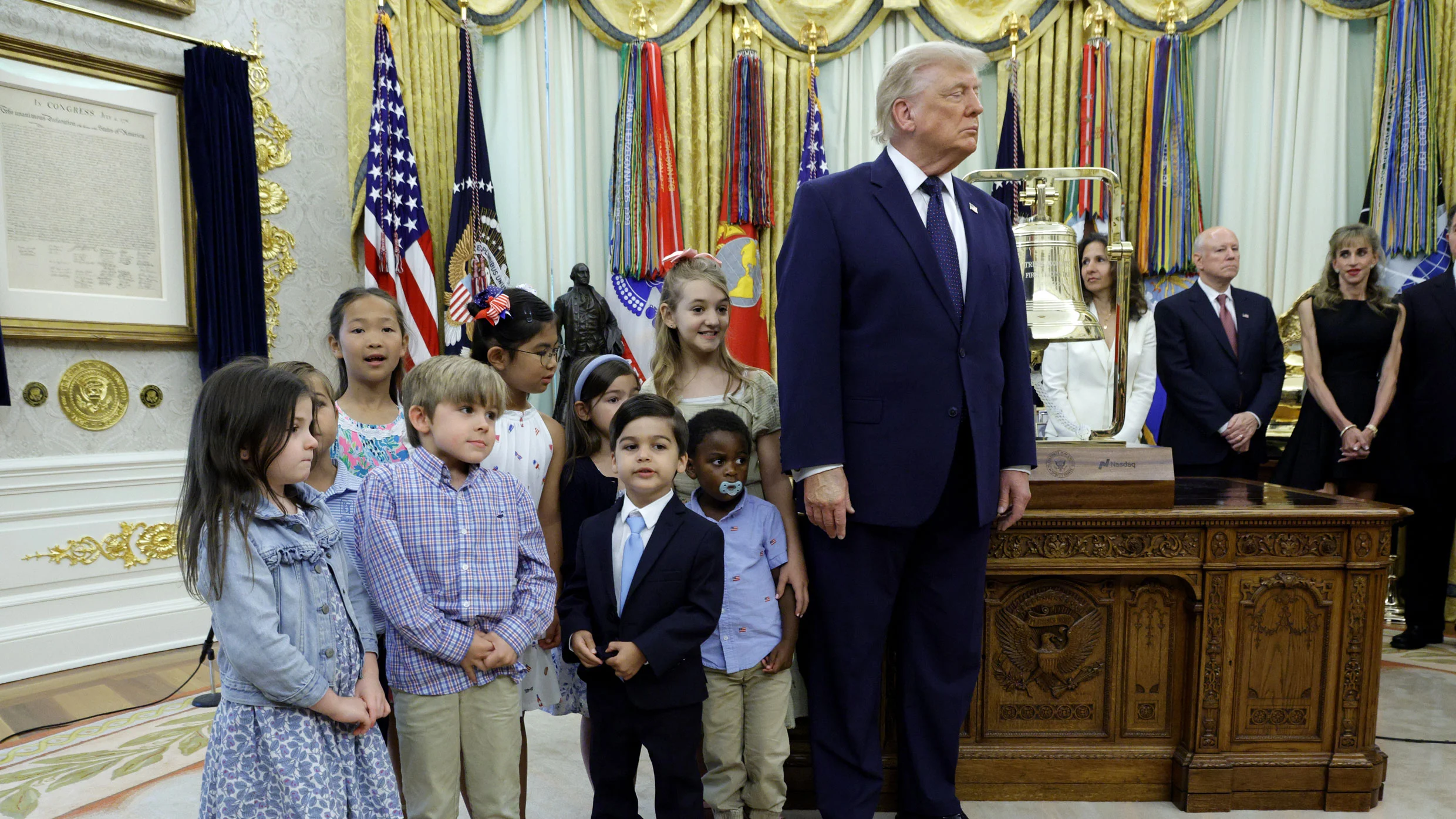
The emergence of Trump-themed content for children represents a strategic extension of former U.S. President Donald Trump’s media empire, repurposing his public persona for younger audiences. Unlike traditional political messaging, these accounts adopt simplified language, animated characters, and interactive formats to introduce children to themes aligned with Trump’s brand—patriotism, economic nationalism, and conservative values. The concept gained traction during Trump’s 2016 presidential campaign, when his unfiltered communication style and viral social media presence created a template for accessible political engagement. By 2020, as his re-election bid intensified, the demand for child-friendly Trump content surged, driven by parental interest in "pro-American" education and the rise of digital platforms catering to young viewers. These accounts now span YouTube, Roblox, TikTok, and educational apps, blending entertainment with subtle ideological messaging.
Timeline of Trump-Themed Content for Children

The evolution of Trump accounts for kids mirrors key moments in his political career and the broader digital media landscape. Early iterations appeared as memes and parody videos on platforms like Twitter and Instagram during the 2016 campaign, but structured content for children began developing in 2018. This period saw the launch of Trump-themed merchandise (e.g., "Make America Great Again" school supplies) and the rise of YouTube channels featuring Trump’s speeches edited for younger audiences. By 2019, interactive content emerged on Roblox, where users could explore virtual spaces themed around Trump’s policies, such as "Build the Wall" mini-games. The COVID-19 pandemic (2020–2021) accelerated the trend, as parents sought educational alternatives, and Trump’s rhetoric on "school choice" and "American resilience" was repackaged for children. Post-2021, the focus shifted to TikTok and Instagram, where short-form videos featuring Trump’s voice (via AI or archival clips) and animated characters like "President Trump’s Little Helper" (a cartoon mascot) dominated. Controversies, such as the 2020 election disputes and January 6 Capitol riot, also influenced content, with some accounts framing Trump as a "fighter against corruption" for kids.
Platforms Hosting Trump Accounts for Children
Trump-themed content for kids is distributed across platforms designed for young audiences, each with distinct formats and engagement strategies. YouTube Kids, for example, hosts channels like "Trump for Kids" and "Kids News Channel (Trump Edition)", which repurpose his speeches into animated segments with titles like "Why America is #1 Again!". Roblox features user-generated games where players complete missions tied to Trump’s slogans (e.g., "Drain the Swamp" puzzles) or role-play as his administration. TikTok and Instagram prioritize short videos—often under 60 seconds—using memes, voiceovers of Trump’s quotes, or sketches parodying his catchphrases (e.g., "Fake News!" delivered by a cartoon character). Educational apps like Khan Academy’s "U.S. Government" modules occasionally reference Trump’s policies, though without direct branding. Below is a comparison of key platforms:
| Platform Name | Type of Content | Target Age Group | Notable Features |
|---|---|---|---|
| YouTube Kids | Animated explainers, edited speech clips, "news" for kids | 5–12 years | Trump’s voice (AI or real), mascot characters, simplified policy analogies (e.g., "trade wars as a video game") |
| Roblox | Interactive games, virtual tours of Trump properties, policy-themed challenges | 8–14 years | User-generated content, "achievements" for completing pro-Trump missions, parental control options |
| TikTok | Memes, voiceovers, parody skits, "day in the life" of a Trump supporter | 10–16 years | Trend-driven (e.g., "#TrumpChallenge" for kids), AI-generated Trump avatars, algorithmic amplification |
| Educational Apps (e.g., Khan Academy, Prodigy Math) | Policy-themed quizzes, "election simulation" games | 9–14 years | Indirect references to Trump’s economic policies, "patriotism" badges, minimal branding |
Parental and Educational Justifications for Trump Accounts
Proponents of Trump-themed children’s content argue that these platforms serve as tools for patriotic education, financial literacy, and critical thinking. Parents and conservative educators often cite three primary benefits: 1) instilling pride in American history, 2) teaching "free-market economics" through Trump’s business analogies, and 3) framing political engagement as a "team sport" (e.g., "red vs. blue" games on Roblox). For example, a YouTube video titled "How Does a President Get Elected? (For Kids)" simplifies the Electoral College using Trump’s 2016 victory as a case study. Similarly, Roblox games like "Trump Tower Escape" position his presidency as a narrative of overcoming "enemies of the people." Educational apps leverage Trump’s rhetoric to explain concepts like supply chains ("Why China is Bad for America") or tax cuts ("How Your Allowance Works Like a Business"). Critics, however, question whether these accounts oversimplify complex issues or create partisan echo chambers before children develop independent political views.
Table of Contents
- Trump Accounts for Kids: Origins, Platforms, and Age-Adapted Political Branding
- Timeline of Trump-Themed Content for Children
- Platforms Hosting Trump Accounts for Children
- Parental and Educational Justifications for Trump Accounts
- Differences Between Adult and Child-Focused Trump Content
- Controversial Perspectives on Marketing Political Figures to Children
- Content Breakdown: What Do Trump Accounts for Kids Actually Show?
- Step-by-Step Breakdown of a Typical Trump Account for Kids’ Video Module
- Specific Content Themes and Their Execution
- Comparative Analysis: Official vs. Parody/Fan-Made Trump Accounts for Kids
Differences Between Adult and Child-Focused Trump Content
Trump accounts for kids employ deliberate strategies to distinguish themselves from adult-oriented material, prioritizing accessibility, positivity, and avoidance of controversy. While adult content relies on rhetorical attacks, policy debates, or viral outrage, children’s versions use: - Mascots and Parodies: Characters like "President Trump’s Little Helper" (a duck-like figure) or "Melania’s Storytime" (a bedtime series) replace direct political figures. - Simplified Themes: Complex policies (e.g., tariffs, healthcare reform) are reduced to metaphors (e.g., "tariffs are like a game of tug-of-war with other countries"). - Entertainment-First Format: Content is structured as videos, games, or songs rather than lectures, with titles like "The Pledge of Allegiance with President Trump!" - Avoidance of Polarizing Topics: Issues like immigration, COVID-19, or election disputes are framed as "big kid problems" or omitted entirely.
For instance, a YouTube video for adults might feature Trump criticizing the "deep state," while the kids’ version replaces it with a cartoon explaining "How Laws Are Made" using Trump’s signature as an example. This shift reflects a marketing strategy to associate Trump with joy, patriotism, and authority without exposing children to the conflict and ambiguity of adult politics.
Controversial Perspectives on Marketing Political Figures to Children
Critics argue that Trump accounts for kids exploit childhood innocence for political gain, while supporters claim they empower young conservatives. A 2022 statement from Media Matters for America highlights this debate:
"Repurposing a polarizing political figure like Donald Trump for children is not about education—it’s about grooming the next generation of voters before they can critically think. These accounts turn complex issues into soundbites and mascot characters, creating a generation that sees politics as a cartoon battle rather than a civic responsibility."
This critique raises three key concerns: - Lack of Balance: Children’s Trump content rarely includes counter-perspectives (e.g., Democratic policies or historical context), risking one-sided indoctrination. - Emotional Manipulation: The use of mascots, catchphrases, and gamification (e.g., Roblox rewards for pro-Trump actions) may condition children to associate Trump with reward and loyalty. - COPPA and Data Privacy Risks: Some platforms collect children’s data (e.g., Roblox usernames, TikTok watch histories) without transparent disclosures, violating Children’s Online Privacy Protection Act (COPPA).
Supporters counter that these
Content Breakdown: What Do Trump Accounts for Kids Actually Show?
Social media and digital platforms designed specifically for children have become a battleground for political branding, where complex ideologies are distilled into bite-sized, visually engaging content. Trump accounts for kids employ a mix of simplified messaging, interactive storytelling, and emotional triggers to create an accessible—and often partisan—introduction to political narratives. This breakdown dissects the structure, themes, and techniques used in these accounts, using sample scripts, comparative analyses, and data-driven insights to illustrate how they shape young audiences.
Step-by-Step Breakdown of a Typical Trump Account for Kids’ Video Module
A standard Trump-branded video or interactive module for children follows a predictable formula: high-energy visuals, repetitive slogans, and a narrative that positions the former president as a heroic figure. Below is a storyboard-style breakdown of a hypothetical 3-5 minute video titled "How to Be a Leader Like Trump: Build Your Confidence!"—a common theme in these accounts.
Visual and Script Structure: 1. Opening Hook (0:00–0:15) - Visual: A vibrant, cartoonish Trump (often depicted with exaggerated features like a bright red tie and a confident smirk) stands on a stage with a backdrop of the American flag and a crowd of cheering kids. - Dialogue: "Hey there, future leaders! You know who’s the BEST at being in charge? That’s right—your pal, President Trump! And today, we’re going to teach you how to be just like him!" - Techniques Used: Name-dropping authority, direct address to the audience, and immediate association with leadership.
2. Lesson Introduction: "What Makes a Great Leader?" (0:16–0:40) - Visual: A split-screen shows Trump shaking hands with children (staged or stock footage) and a checklist appearing on-screen: "Speak Loudly," "Never Give Up," "Make America #1!" - Dialogue: "First rule—you gotta TALK BIG! Just like me! Remember when I said, ‘We’re going to win so much, you’ll get tired of winning’? That’s how you inspire people!" - Educational Gap: Confuses rhetorical flair with actual leadership skills; no mention of collaboration, empathy, or evidence-based decision-making.
3. Interactive Exercise: "The Confidence Challenge" (0:41–1:30) - Visual: A game-like segment where kids are prompted to mimic Trump’s gestures (e.g., pointing, thumbs-up, or repeating catchphrases like "Yuge!"). A mascot—often a cartoon eagle or a "Trump Jr. Lite" character—cheers them on. - Dialogue: "Now it’s YOUR turn! Stand up tall, say ‘I’m a winner!’ and give yourself a high-five. See? You’re already a leader!" - Psychological Technique: Positive reinforcement paired with performative confidence, reinforcing self-esteem tied to partisan identity.
4. Policy Simplification: "Why Rules Are for Losers" (1:31–2:30) - Visual: Animated clips of "bad guys" (e.g., faceless bureaucrats or politicians from opposing parties) blocking a road, while Trump smashes through with a sledgehammer labeled "Trump’s Big Ideas." - Dialogue: "Some people say, ‘Oh, you can’t do that!’ But guess what? I did it—and America loved it! Like when I said we’d build a wall. No more sneaky bad guys crossing the border!" - Oversimplification: Ignores legal processes, bipartisan compromises, or the complexity of immigration policy. Portrays opposition as inherently malicious.
5. Closing Call-to-Action (2:31–3:00) - Visual: Trump winks at the camera, with a pop-up encouraging kids to "Share this with your friends!" and "Tell your parents you’re learning to be a winner!" - Dialogue: "Remember, kids—leaders don’t just dream big. They MAKE it happen! Now go out there and show the world what you’ve got. And don’t forget—‘We will make America great again… starting with YOU!’" - Engagement Loop: Encourages viral sharing and parental involvement, embedding the message in family discussions.
Underlying Messaging: This script exemplifies how Trump accounts for kids avoid nuance in favor of emotional storytelling. The video prioritizes: - Authority figures (Trump as the sole source of truth). - Binary thinking (good vs. bad, winners vs. losers). - Action over analysis (gestures and slogans replace policy details).
Specific Content Themes and Their Execution
Trump accounts for kids frequently revolve around three core themes: leadership training, economic nationalism, and revisionist history. Each theme is tailored to resonate with children through familiar tropes—sports analogies, superhero narratives, and simplified cause-and-effect logic.
1. "How to Be a Leader Like Trump" Content in this category often frames leadership as a performative skill rather than a governance responsibility. Examples include: - Confidence-Building Workshops: - Format: Videos where kids are taught to "own the room" by standing tall, speaking loudly, and repeating Trump’s catchphrases (e.g., "Nobody knows more than me!"). - Visual Aid: Side-by-side comparisons of a "scared kid" vs. a "Trump-style leader" (the latter depicted with bold colors and dynamic angles). - Red Flag: No mention of active listening, humility, or ethical considerations in leadership.
- Sports Metaphors: - Example: A video titled "Trump’s Playbook for Victory" compares politics to a football game, where Trump is the coach and opponents are "weak players." - Quote from Content: "Just like in sports, you need a great team—but you also need a star player. And guess who that is? ME!"
2. "Economics for Kids: Why America is #1" Economic lessons are stripped of complexity and presented as America-centric success stories, often using: - Supply/Demand Analogies: - Example: A video explains tariffs by showing Trump as a "shopkeeper" who puts up a sign: "Foreign toys? Too expensive! Buy American!" - Visual: A cartoon factory labeled "USA" with a giant American flag, while foreign factories are depicted as small, struggling, and "unfair."
- Job Creation Myths: - Script Snippet: "When I was president, we created so many jobs, even Santa Claus had to hire elves to keep up! That’s how you know an economy is strong!" - Omission: No discussion of automation, outsourcing, or pre-existing economic trends.
3. "History Lessons: How Trump Made America Great Again" These modules rewrite recent history through a heroic narrative, often ignoring: - Contextual Details: For example, the 2016 election is framed as a David vs. Goliath battle where Trump single-handedly defeated a corrupt system. - Opposing Perspectives: Critics (e.g., media, scientists, or rival politicians) are labeled as "haters" or "fake news peddlers."
- Example: A video titled "The Best Four Years Ever!" uses: - Visuals: A timeline with only Trump’s achievements (e.g., tax cuts, deregulation) and a "before/after" split showing a struggling America vs. a thriving one. - Dialogue: "Before me, America was losing. But then—I came in like a superhero, and BOOM! We won!"
Comparative Analysis: Official vs. Parody/Fan-Made Trump Accounts for Kids
Not all Trump-branded content for children originates from official sources. Some accounts are fan-made, satirical, or parody, creating a spectrum of tones and educational values. Below is a comparison of two contrasting accounts:
| Account Name | Tone | Educational Value (1-5) | Potential Red Flags |
|---|---|---|---|
| @TrumpKidsOfficial (Hypothetical official-style account) | Inspirational, authoritative, and slightly aggressive. Uses patriotic music, bold text, and rapid-fire slogans. | 1/5 – Focuses on memorization of slogans and hero-worship rather than critical thinking or factual accuracy. |
|
Leave a Comment
Comments are moderated before appearing. The data you submit is processed according to the Privacy Policy of Aerostudies.