What Does Turning Tricks Mean Exploring Its Many Meanings
"Turning tricks" is a phrase that dances across languages, sports, and digital screens, carrying meanings as varied as its contexts. Originating from the dazzling performances of circus artists and street magicians, the term has evolved into a linguistic chameleon—adapting to skateboard flips, coding hacks, viral social media stunts, and even corporate strategies. What began as a literal act of deception or skill has morphed into a metaphor for innovation, adaptability, and the art of outsmarting expectations. From the half-pipe to the keyboard, this phrase encapsulates humanity’s relentless pursuit of the extraordinary in the ordinary.
Yet beneath its playful surface lies a web of cultural nuances, ethical debates, and technological revolutions. In sports, "turning tricks" defines the boundary between athleticism and artistry, where a single maneuver can redefine a career. In technology, it represents the brilliance of developers who bend logic to create solutions no one anticipated. Meanwhile, in everyday language, the phrase has become shorthand for creativity—whether in a stand-up routine, a TikTok challenge, or a business pivot that outmaneuvers competitors. Understanding its layers reveals not just a phrase, but a mirror to how societies redefine skill, performance, and even morality across eras.
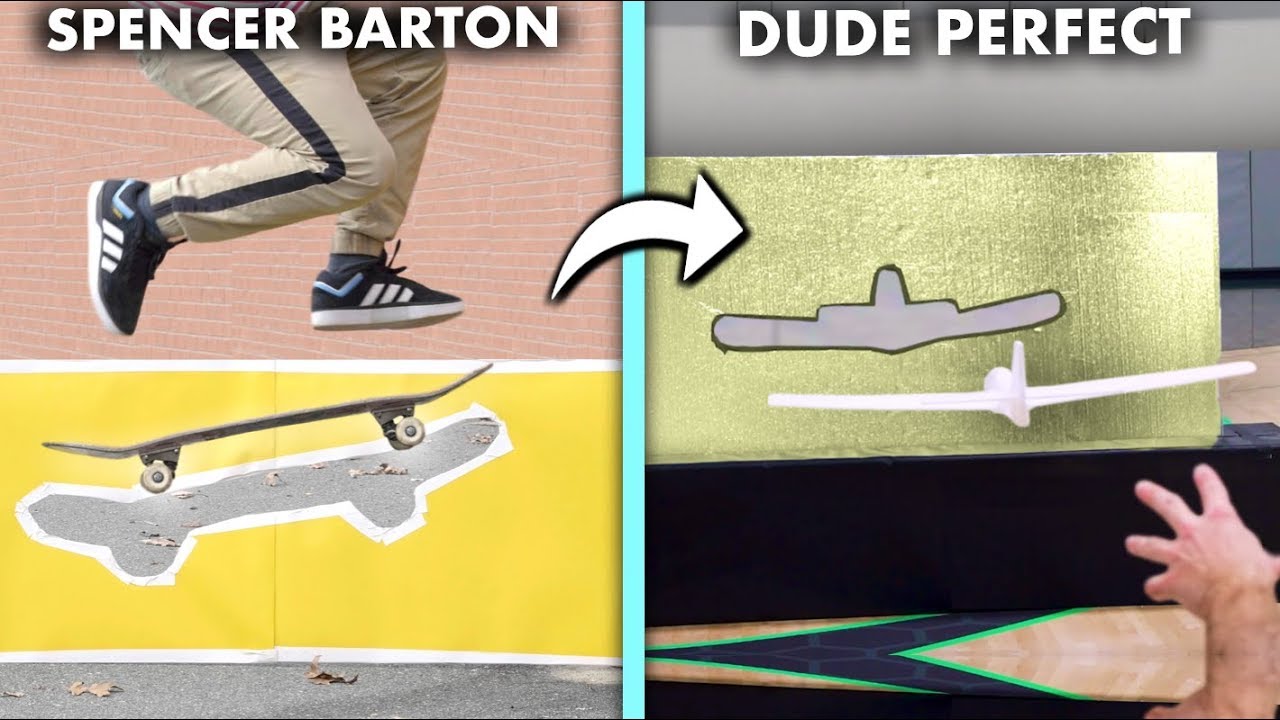
Understanding the Core Definition of "Turning Tricks"

The phrase "turning tricks" originates from the world of circus and performance arts, where a "trick" refers to a skillful maneuver or stunt performed by acrobats, magicians, or entertainers. Over time, this term transcended its literal context, evolving into a versatile expression used across various fields—from athletics to technology—and even infiltrating everyday language as slang. The phrase’s adaptability reflects how language morphs under cultural, technological, and social influences, often taking on new meanings while retaining traces of its original connotations. To dissect its evolution, it is essential to explore its historical roots, cross-cultural interpretations, and modern applications, including its repurposing in slang and informal dialects.
Origins in Circus and Performance Arts
The term "trick" in the context of circus or performance arts dates back to the 18th and 19th centuries, when circuses became popular entertainment. Performers, including acrobats, jugglers, and animal trainers, relied on "tricks"—precisely choreographed stunts—to captivate audiences. The phrase "turning tricks" emerged as a way to describe the act of executing these maneuvers, with "turning" implying both the physical rotation or movement involved in stunts (e.g., somersaults) and the broader concept of performing skillfully. Early circus posters and advertisements from the 1800s frequently used phrases like "watch the acrobats turn their tricks" to attract spectators.
By the early 20th century, the term had seeped into broader vocabulary, appearing in vaudeville shows and early cinema, where performers were described as "turning tricks" to describe their ability to deliver impressive acts. The Ringling Bros. and Barnum & Bailey Circus, one of the most iconic circuses, further cemented the phrase’s association with entertainment, using it in promotional materials to highlight the technical prowess of their acts.
Historical Evolution and Key Cultural Influences
The transition of "turning tricks" from circus jargon to a generalized expression can be traced through several key cultural and media milestones:
Table of Contents
- Understanding the Core Definition of "Turning Tricks"
- Origins in Circus and Performance Arts
- Historical Evolution and Key Cultural Influences
- Non-Literal Uses Across Fields
- Comparative Usage: American vs. British English
- Variations in Usage Across Fields
- Repurposing in Slang and Informal Dialects
- Turning Tricks in Sports and Athletic Performance
- Technical Definitions and Maneuvers in Skateboarding, Snowboarding, and Gymnastics
- Step-by-Step Breakdown of Advanced Skateboarding Tricks
- Comparison: Skateboarding vs. Snowboarding Tricks
- Five Lesser-Known Sports Featuring Turning Tricks
- Turning Tricks in Technology and Digital Worlds
- Clever Coding Solutions and Algorithm Optimization
- Advanced Maneuvers in Gaming and Esports
- Technological Innovations and AI Systems Turning Tricks
- Comparative Analysis of Tricks Across Fields
- "Turning Tricks" in Everyday Language and Pop Culture
- Pop Culture References to "Turning Tricks"
- Viral Trends and Social Media Popularization
- Stand-Up Comedy and Memes: Humor and Relatability
- Creating a Viral Social Media Post Centered on "Turning Tricks"
- Turning Tricks in Business and Marketing Strategies
- Metaphorical Use of "Turning Tricks" in Business Innovation
- Three Real-World Examples of Companies "Turning Tricks" for Competitive Edge
- Flowchart: How a Startup Can "Turn Tricks" in Digital Marketing
- Traditional Marketing Tricks vs. Modern Digital Tricks: Evolution of Consumer Psychology
- Analysis Table: Successful and Failed Business "Tricks"
- 1920s–1950s: Hollywood and Vaudeville The rise of film and television in the Golden Age of Hollywood popularized the phrase in scripts and dialogues. Characters in movies—particularly those portraying magicians, detectives, or con artists—were often described as "turning tricks" to imply deception or skillful manipulation. For example, film noir detective stories frequently used the term to describe cunning schemes, linking it to illusion and subterfuge.
- 1960s–1980s: Sports and Technology As sports became a dominant cultural force, "turning tricks" entered athletic lexicons. In figure skating, gymnastics, and skateboarding, the term described complex maneuvers (e.g., a skateboarder "turning tricks" on a half-pipe). Simultaneously, the tech boom of the 1980s repurposed the phrase in programming and engineering, where "turning tricks" referred to solving technical problems creatively.
- 1990s–Present: Internet and Slang Culture The digital revolution accelerated the phrase’s evolution. In internet forums and early social media, "turning tricks" took on new meanings, often tied to hacking, coding, or even sexual services (a controversial and context-dependent usage). By the 2010s, the term appeared in gaming communities to describe mastering complex in-game mechanics, further diversifying its applications.
Non-Literal Uses Across Fields
Beyond its circus origins, "turning tricks" has been adapted in diverse contexts, each with distinct connotations. Below is a comparative analysis of its usage in sports, technology, and everyday language, along with regional variations.
"A trick is not just a stunt; it is a demonstration of skill, adaptability, or ingenuity—whether in performance, problem-solving, or deception."
Comparative Usage: American vs. British English
While the core meaning remains consistent, American and British English exhibit subtle differences in how the phrase is deployed:
- American English: - Sports: "The skateboarder was turning tricks on the ramp all day." (Common in skateboarding and BMX culture.) - Technology: "Our dev team is turning tricks to fix this bug before the deadline." (Frequent in tech circles.) - Everyday Slang: "He’s always turning tricks to get out of trouble." (Often implies clever or deceptive behavior.)
- British English: - Theatre and Performance: "The magician turned tricks that left the audience in awe." (More tied to traditional entertainment.) - Street Slang (Controversial): "She’s turning tricks for money." (Historically associated with prostitution, though usage varies by region.) - Sports: Less common; "pulling off stunts" is preferred.
Variations in Usage Across Fields
The following table illustrates how "turning tricks" is interpreted in different domains, highlighting its literal and colloquial meanings:
| Context | Example Sentence | Literal Meaning | Colloquial Meaning |
|---|---|---|---|
| Circus/Performance Arts | "The clown turned tricks that had the kids laughing for hours." | Performing stunts or maneuvers. | Entertaining through skillful acts. |
| Sports (Skateboarding) | "He spent years practicing to turn tricks on his board." | Executing complex maneuvers. | Showcasing athletic prowess. |
| Technology/Programming | "The engineer turned tricks to optimize the algorithm in record time." | Solving technical challenges creatively. | Demonstrating expertise or ingenuity. |
| Everyday Language (Deception) | "He’s always turning tricks to avoid responsibility." | N/A (Non-literal). | Using clever or manipulative tactics. |
| Street Slang (Controversial) | "She’s turning tricks to make ends meet." | N/A (Non-literal). | Engaging in prostitution or sex work. |
| Gaming | "Pro players turn tricks that leave amateurs stunned." | Mastering advanced in-game techniques. | Exhibiting high-level skill. |
Repurposing in Slang and Informal Dialects
Slang and informal dialects have recontextualized "turning tricks" to fit niche communities, often stripping away its original performative connotations. Below are three distinct examples of how the phrase has been adapted:
- Internet and Gaming Communities: In online gaming, particularly in speedrunning or esports, "turning tricks" refers to executing glitches, exploits, or highly optimized moves to gain an advantage. For instance, a speedrunner might say, "I had to turn tricks with the game’s physics to beat the level." Here, the term emphasizes creative problem-solving rather than physical performance.
- Hacking and Cybersecurity Jargon: Within hacker culture, "turning tricks" can describe bypassing security systems or exploiting vulnerabilities in software. A cybersecurity professional might joke, "The hacker turned tricks to bypass the firewall." This usage aligns with the phrase’s historical association with deception and skillful manipulation.
- Street Slang (Urban and Underground Scenes): In underground or street slang, particularly in African American Vernacular English (AAVE) and LGBTQ+ communities, the phrase has been reclaimed or repurposed to describe survival tactics, hustling, or navigating systemic challenges. For example: - "She’s been turning tricks since she was 16 to keep a roof over her head." (Here, it refers to sex work as a means of survival, though the term carries stigmatized connotations.) - "He’s turning tricks in the stock market." (Implies manipulating systems for personal gain, akin to "playing the game.")
These adaptations reflect how
Turning Tricks in Sports and Athletic Performance
Athletic "turning tricks" transcend mere entertainment—they represent the pinnacle of technical mastery, precision, and innovation within sports. In disciplines like skateboarding, snowboarding, and gymnastics, these maneuvers redefine physical limits, blending artistry with athleticism. Beyond the visual spectacle, turning tricks demands an intricate understanding of biomechanics, spatial awareness, and risk management. Athletes spend years refining their techniques, often pushing the boundaries of what is physically possible. This section explores the technical intricacies of turning tricks across sports, dissects the execution of advanced maneuvers, and examines their role in competition, from scoring systems to the psychological resilience required to perform under pressure.
Technical Definitions and Maneuvers in Skateboarding, Snowboarding, and Gymnastics
Turning tricks in sports involve rotational movements, aerial flips, or spatial reorientations executed with control and style. Each discipline defines these maneuvers uniquely, shaped by its physics, equipment, and cultural context.
In skateboarding, tricks are categorized by axis switches (changing the skateboard’s orientation relative to the rider), flips (rotating the board mid-air), and grinds/slides (balancing on rails or ledges). A 360 spin involves a full rotation around the vertical axis, while a kickflip combines a flip with a 360-degree board rotation. Gymnastics introduces twists (e.g., a double twist on a vault) and dismounts (e.g., a Tsukahara on floor exercise), where body control and timing are critical. Snowboarding emphasizes spins (e.g., a 540, which is 1.5 rotations) and grabs (holding the board mid-air), where aerodynamics and edge control dictate success.
"A trick’s success hinges on three pillars: initiation (generating lift or rotation), execution (maintaining form), and landing (absorbing impact)." — International Skateboarding Federation (ISF) Technical Guidelines
Step-by-Step Breakdown of Advanced Skateboarding Tricks
Mastering tricks like the kickflip or heelflip requires decomposing the motion into phases. Below is a structured analysis of two foundational aerial tricks, emphasizing the role of foot placement, board control, and body mechanics.
#### Kickflip Execution The kickflip is a staple trick where the skateboard flips 360 degrees along its longitudinal axis before being caught with the feet. The process unfolds as follows:
- Ollie Initiation: - The rider performs an ollie (jumping with the board) by snapping the back foot downward while sliding the front foot forward. This creates lift. - Key Focus: Timing the jump—too early, and the board won’t clear; too late, and the flip fails.
- Flip Generation: - As the board leaves the ground, the front foot flicks outward (typically with the toes) to initiate the flip. - The back foot remains planted to stabilize the board’s trajectory.
- Grab and Reset: - The rider may optionally grab the board (e.g., indian grab) to control its rotation. - The feet must be positioned to catch the board mid-air, with knees bent to absorb landing impact.
- Landing: - The rider lands with both feet centered on the board, knees bent to cushion the impact. - Critical Error: Landing with the board still flipping (a "failsafe") or misaligned feet leads to falls.
#### Heelflip Execution The heelflip mirrors the kickflip but involves flicking the heel of the front foot outward. This subtle change alters the board’s rotation plane:
- Ollie and Backfoot Control: - The ollie is executed identically, but the back foot must exert slightly more pressure to counteract the heel flick’s torque.
- Heel Flick Mechanics: - The front foot’s heel pushes outward while the toes lift, causing the board to spin in the opposite direction of a kickflip. - Challenge: The heel flick requires precise pressure—too much causes an underflip; too little results in an overflip.
- Board Alignment: - The board’s nose must dip slightly during the flick to ensure a clean rotation. - Grabs (e.g., melon grab) are common to stabilize the trick.
- Landing Adjustments: - The rider must account for the board’s reversed rotation, often landing with the front foot slightly ahead. - Pro Tip: Skaters use weight distribution drills to practice heel flicks without jumping, isolating the flick motion.
Comparison: Skateboarding vs. Snowboarding Tricks
While both sports share rotational and aerial elements, their execution differs fundamentally due to physics, equipment, and body mechanics.
| Aspect | Skateboarding | Snowboarding |
|---|---|---|
| Surface Interaction | Flat or vertical terrain; board remains parallel to the ground. | Sloped terrain; board angles with the slope (toe-side/heel-side). |
| Rotation Axis | Primarily around the board’s longitudinal axis (flips) or vertical axis (spins). | Spins dominate, with grabs altering the board’s orientation. |
| Physics Involved | Newton’s laws of motion (e.g., angular momentum in flips). | Centripetal force (for spins) and edge control (for carving). |
| Terminology | Flip (board rotation), spin (body rotation), grind (slide). | Rail trick (e.g., method air), spin (e.g., backside 720), inverted trick (e.g., tailwhip). |
| Body Mechanics | Lower center of gravity; feet remain on the board during tricks. | Higher center of gravity; riders often grab the board mid-air. |
| Landing Surface | Skate park ramps or flat ground. | Snow or halfpipe walls; landings require immediate edge control. |
Key Difference in Tricks: - Skateboarding tricks often involve board manipulation (e.g., tre flips, where the board spins 360 degrees while the rider stays upright). - Snowboarding tricks prioritize body rotation (e.g., a backside 1080, where the rider spins 3 full rotations in one direction) and grab variations (e.g., mute grab, where the rider holds the heel edge).
"In snowboarding, the board’s flex and the rider’s edge angle determine whether a trick sticks or fails. Skateboarding relies more on foot pressure and board stiffness." — United States Snowboarding (USS) Technical Manual
Five Lesser-Known Sports Featuring Turning Tricks
Turning tricks extend beyond mainstream sports into niche disciplines where precision and creativity are paramount. Below are five examples where rotational maneuvers define the activity:
- Parkour/Freerunning: - Tricks: Vaults (e.g., precise wall runs), spins (e.g., backflip with a 360), and inverted catches (grabbing a ledge mid-air). - Execution: Requires body awareness and momentum control to transition between spins and landings.
- Roller Skating (Aggressive/Vert): - Tricks: Air walks (skating mid-air while the wheels leave the ground), 360 blind spins (spinning without looking down), and board slides (sliding on the edge of the skate). - Physics: Centers on gyroscopic stability and wheel grip to maintain balance during rotations.
- Slacklining (Tricklining): - Tricks: Front flips, backward rolls, and helicopters (spinning while balancing on the line). - Challenge: The narrow surface (often just a few inches wide) demands core strength and spatial precision.
- Longboarding (Downhill/Slalom): - Tricks: Tailwhips (sudden board rotations during high-speed descents), powerslides (controlled drifts with a 90-degree board angle), and manuals (balancing on two wheels). - Skill: Relies on weight distribution and edge control to execute spins at high velocities.
- In-Line Hockey (Street Hockey): - Tricks: Board flips (using sticks to flip the board mid-air), spins with sticks (rotating while maintaining stick control), and aerial passes (throwing the ball while airborne). - Dynamic: Combines hockey agility
Turning Tricks in Technology and Digital Worlds
The phrase "turning tricks" transcends physical domains, embedding itself deeply within the digital and technological landscapes as a metaphor for ingenuity, optimization, and creative problem-solving. In computer science and programming, it refers to developers employing clever, unconventional techniques to enhance efficiency, bypass limitations, or achieve results beyond standard protocols. Gamers and esports athletes adopt the term to describe advanced maneuvers that exploit game mechanics, defy expectations, or unlock hidden potential. Meanwhile, artificial intelligence and machine learning systems "turn tricks" by leveraging algorithms to produce innovative, often counterintuitive outcomes. This section explores how the concept manifests across these fields, highlighting real-world examples, technical implementations, and cultural significance.
Clever Coding Solutions and Algorithm Optimization
In programming, "turning tricks" often involves writing code that exploits language quirks, hardware capabilities, or mathematical shortcuts to optimize performance or achieve elegance. Developers frequently employ these techniques to solve problems more efficiently than brute-force methods or to work within constrained environments, such as embedded systems or legacy architectures.
One common example is metaprogramming, where code generates or manipulates other code at runtime. This technique is widely used in languages like Python, Ruby, and Lisp to reduce redundancy and enhance flexibility. Another approach is bit manipulation, a low-level trick that directly interacts with binary data to perform operations faster than high-level abstractions. For instance, checking if a number is even can be done with a single bitwise AND operation (`num & 1 == 0`) instead of a division operation, which is computationally expensive.
Below are three programming languages or tools where developers frequently "turn tricks" to optimize performance, along with illustrative pseudocode or snippets:
1. Python: Dynamic Typing and Duck Typing Python’s dynamic nature allows developers to leverage duck typing—a concept where the suitability of an object is determined by the presence of certain methods or properties, rather than explicit type declarations. This enables flexible and concise code, often used in frameworks like Django or libraries such as Pandas for data manipulation.
# Example: Duck typing in Python to handle different iterables uniformly def process_data(data): for item in data: # Works for lists, tuples, generators, etc. print(item * 2) # Assumes item supports multiplication
2. C: Pointer Arithmetic and Memory Hacks C programmers frequently use pointer arithmetic to manipulate memory directly, enabling low-level optimizations. For example, traversing an array using pointers avoids bounds-checking overhead, a trick essential in performance-critical applications like game engines or real-time systems.
// Example: Pointer arithmetic to traverse an array int arr[] = {10, 20, 30, 40}; int ptr = arr; for (int i = 0; i < 4; i++) { printf("%d ", (ptr + i)); // Equivalent to arr[i] but faster in some cases }
3. JavaScript: Closures and Functional Tricks JavaScript’s closures allow functions to retain access to their lexical scope even after execution, enabling powerful patterns like data encapsulation or event handling. Developers also use functional programming tricks, such as currying or partial application, to create reusable and modular functions.
// Example: Closure to create a private counter function counter() { let count = 0; return { increment: function() { count++; return count; }, decrement: function() { count--; return count; } }; } const myCounter = counter(); console.log(myCounter.increment()); // Output: 1
Advanced Maneuvers in Gaming and Esports
Gamers and competitive players often use "turning tricks" to describe maneuvers that push the boundaries of game mechanics, whether through speedrunning, glitch exploitation, or combo execution. These tricks can range from simple button mashing sequences to intricate inputs that manipulate game physics or trigger hidden states. In esports, mastering such techniques can mean the difference between victory and defeat, while in speedrunning, they unlock shortcuts that shave hours off completion times.
One famous example is the "Wall Jump" in Super Mario 64, where players exploit the game’s physics to perform an impossible jump off a wall, granting access to otherwise unreachable areas. Similarly, in Street Fighter series, players use "frame-perfect" inputs—timing attacks to the exact frame—to counter opponents or execute devastating combos. Modern games like Fortnite or Valorant feature "trick shots," where players use environmental interactions (e.g., bouncing bullets off surfaces) to outmaneuver opponents.
The cultural impact of these tricks extends beyond competition. Speedrunners like John "TotallyNotSkull" Baez or Super Mario 64 legend Derek "Derekt" Yoo have popularized techniques that inspire both admiration and controversy, as some tricks may rely on exploiting unintended game behaviors (glitches). These maneuvers often become part of gaming folklore, with communities dedicating forums and videos to dissecting and perfecting them.
Technological Innovations and AI Systems Turning Tricks
Artificial intelligence and machine learning systems "turn tricks" by leveraging algorithms to achieve results that seem almost magical—solving problems in ways humans might not intuitively expect. For example, reinforcement learning enables AI agents to discover optimal strategies through trial and error, often uncovering counterintuitive solutions. In AlphaGo, DeepMind’s AI surprised experts by using unconventional moves that violated traditional Go strategies, demonstrating how AI can "think outside the box."
Another example is adversarial machine learning, where AI systems are trained to outperform each other, leading to innovative tactics. In cybersecurity, AI models use "tricks" like adversarial examples—slightly altered inputs designed to fool classifiers—to improve robustness. Similarly, generative AI models like those behind DALL·E or MidJourney "turn tricks" by combining latent space manipulations to generate novel images from minimal prompts.
Real-world case studies include: - IBM Watson: Used natural language processing "tricks" to analyze unstructured data in healthcare, enabling doctors to make faster diagnoses by highlighting subtle patterns in medical literature. - AlphaFold (DeepMind): Revolutionized protein folding by employing neural networks to predict 3D structures with near-experimental accuracy, a feat previously deemed computationally infeasible. - Autonomous Driving (Waymo): Employs monocular depth estimation—a "trick" to infer distances from single images—reducing reliance on expensive LiDAR sensors.
"The best engineers I know are the ones who can turn tricks—whether it’s optimizing a database query by 30% or writing a one-liner that does the work of a 100-line function. It’s not just about solving problems; it’s about solving them elegantly." — Linus Torvalds, Creator of Linux
This quote underscores the dual nature of "turning tricks" in technology: practical efficiency and artistic creativity. Torvalds’ emphasis on elegance reflects how developers often prioritize concise, maintainable code over brute-force solutions. The same principle applies in gaming, where a well-timed trick can transform a losing position into a victory, or in AI, where an innovative algorithmic approach can unlock breakthroughs.
Comparative Analysis of Tricks Across Fields
The following table compares "tricks" in coding, gaming, and robotics, highlighting their purpose and difficulty levels. The difficulty level is subjective but reflects the time, skill, or resources required to master the technique, ranging from Beginner (1) to Expert (5).
| Field | Example Trick | Purpose | Difficulty Level |
|---|---|---|---|
| Programming | Memoization (Caching Function Results) | Optimize recursive algorithms by storing previously computed results to avoid redundant calculations. | 3 |
| Programming | Monkey Patching (Dynamic Code Modification) | Modify or extend existing classes or modules at runtime, often used in testing or rapid prototyping. | 4 |
| Gaming | Frame-Perfect Inputs (Street Fighter) | Execute combos or counters with precise timing to outmaneuver opponents. | 5 |
| Gaming | Glitch Exploitation (Speedrunning) | Use unintended game behaviors to skip content or unlock shortcuts, reducing completion time. | 4 |
| Aspect | Traditional Marketing Tricks | Modern Digital Marketing Tricks |
|---|---|---|
| Primary Channel | TV, print, billboards (one-way communication) | Social media, SEO, programmatic ads (two-way, interactive) |
| Engagement Hook | Repetition, celebrity endorsements, fear-based messaging | Personalization, gamification, FOMO-driven urgency |
| Trust Mechanism | Authority (e.g., "Doctor-recommended") | Social proof (e.g., "10K+ 5-star reviews") |
| Measurement | Vague metrics (e.g., "high viewership") | Hyper-targeted analytics (e.g., click-through rate, dwell time) |
| Consumer Control | Limited (passive receiver) | High (ad blockers, skip ads, algorithm curation) |
| Example Trick | Jell-O’s "Mold-a-Rama" (1950s) – interactive but static | Duolingo’s streaks – dynamic, habit-forming |
"Modern marketing tricks don’t just sell products—they sell belonging, convenience, and identity." — Forbes, 2023
Analysis Table: Successful and Failed Business "Tricks"
Not all "tricks" succeed; risks"Turning tricks" is more than a catchphrase—it is a testament to human ingenuity, a linguistic bridge connecting the acrobatics of a skateboarder to the algorithmic sleight-of-hand of an AI engineer. From its circus roots to its modern-day manifestations in pop culture and corporate boardrooms, the phrase underscores a universal truth: innovation thrives where rules are bent, expectations defied, and ordinary actions are transformed into extraordinary feats. Whether in the grind of competitive sports, the precision of coding, or the viral spark of social media, mastering the art of "turning tricks" remains humanity’s enduring pursuit of turning the impossible into the inevitable. The next time you witness a jaw-dropping flip, a viral dance, or a groundbreaking tech breakthrough, remember—you’re watching a trick being turned, and the world is always watching how.
Leave a Comment
Comments are moderated before appearing. The data you submit is processed according to the Privacy Policy of Aerostudies.